High-Performance Commercial & Utility Vehicles
Precision-manufactured 2-seater electric carts, mobile retail trailers, and specialized housekeeping mobility solutions tailored for Japan’s hospitality, municipal, and industrial sectors.

HONLU Mobile Commercial Coffee Shop & Dining Trailer
DOT & CE certified full-kitchen mobile cart designed for Japanese street vending, outdoor resort dining, and festival hospitality.

Commercial Hotel Room Service & Janitorial Service Cart
Ergonomic housekeeping service cart featuring heavy-duty refuse bags and silent-swivel casters optimized for narrow Ryokan corridors.

Commercial Housekeeping Cart (33L High Capacity)
4-wheel adjustable handle indoor/outdoor trolley constructed from premium non-marking impact polypropylene for Japanese luxury hotels.

Moto Piaggio Ape Vintage Mobile Espresso & Gelato Cart
Retro-styled 2-seater micro-mobile food truck equipped with complete stainless-steel kitchen modules for high-density Japanese tourist zones.

2-Tier Stainless Steel Movable Dining & Catering Cart
Precision-welded 9L high-load kitchen trolley built with SUS304 steel for strict food hygiene standards in Japanese commercial kitchens.

3-Layer Medical Grade Socket Beauty & Dental Tool Cart
Integrated power-socket mobile stand designed for medical clinics, aesthetic salons, and laboratory settings requiring high sanitation.

Wholesale Round-Tube Heavy Industrial Catering Trolley
Heavy-gauge 201/304 stainless steel frame engineered for continuous usage in food processing facilities and high-volume banquet halls.
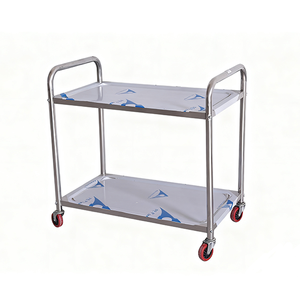
Eco-Friendly Two-Layer Customized Kitchen Serving Cart
Tailored dimension silvershine pushcart engineered specifically for space-restricted Japanese dining establishments and healthcare facilities.
Executive Whitepaper: The Evolution of 2-Seater Electric Mobility in Japan
Japan represents one of the world's most sophisticated markets for micro-mobility, low-speed electric vehicles (LSV), and specialized commercial utility transport. Driven by the country’s stringent Green Transformation (GX) roadmap targeting carbon neutrality by 2050, enterprise buyers—ranging from high-end hot spring resorts (Ryokan) in Hakone and Kyoto to logistics hubs in Tokyo and Osaka—are rapidly transitioning away from internal combustion engine (ICE) utility carts to clean, lithium-powered 2-passenger electric platforms.
Navigating the Japanese import landscape requires suppliers to go beyond standard manufacturing. Importers demand strict adherence to METI (Ministry of Economy, Trade and Industry) electrical standards, compliance with Japan's Road Transport Vehicle Act (道路運送車両法) for low-speed categories, and exceptional spatial efficiency tailored to narrow roadways (狭い路地), compact elevators, and stringent indoor noise thresholds.
As a premier global supplier backed by advanced vehicle engineering (in partnership with Bintelli’s established manufacturing standards), our 2-seater electric golf carts, commercial utility vehicles, and mobile retail platforms are specifically built to solve these structural market challenges. By integrating high-density Automotive-Grade Lithium (LiFePO4) battery packs, reinforced lightweight aluminum frames, and customizable cargo configurations, we deliver an uncompromised balance of range, safety, and durability.
This industry paper details the technical specifications, localized application scenarios, regulatory pathways, and OEM capabilities required for Japanese importers, corporate fleets, and distributors seeking a high-ROI partnership with an experienced global exporter.
Why 2-Seater Form Factors Outperform Larger Fleets in Japan
Unlike Western markets that often prioritize 4-to-6 passenger stretched vehicles, Japan’s spatial architecture heavily favors compact 2-seater layouts. With a average turning radius under 3.2 meters, width profile below 1.2 meters, and exceptional power-to-weight efficiency, 2-passenger electric carts seamlessly navigate narrow mountain paths, historical village walkways, and crowded industrial cleanrooms where standard vehicles simply cannot operate.
Localized Application Scenarios across Japan
From snow-covered Northern resorts to high-density Tokyo urban logistics, discover how our 2-seater electric platforms are deployed.
Luxury Ryokans & Onsen Resorts
Locations: Kyoto, Hakone, Beppu, Yufuin
Quiet, non-intrusive operations are critical for traditional Japanese hospitality. Our 2-seater electric carts deliver near-silent operation (<45dB), moving guests’ luggage and room service seamlessly along delicate wooden pathways and manicured stone gardens without disrupting the tranquil environment.
Alpine & Winter Sport Shuttles
Locations: Niseko (Hokkaido), Hakuba (Nagano)
Sub-zero operating temperatures destroy inferior lead-acid batteries. Our export models feature optional thermal battery heating modules and sealed anti-corrosive chassis components, providing reliable cold-weather starting and traction on icy alpine access roads.
Urban Micro-Logistics & Retail
Locations: Tokyo, Osaka, Yokohama
Confronted with tight traffic rules and limited parking, our 2-seater utility vehicles and mobile retail trailers (such as the HONLU Coffee Shop Cart and Piaggio Ape Food Cart) offer ultra-compact footprints for last-mile delivery and high-margin street vending in pedestrian shopping arcades (商店街).
Export Standard vs. Japanese Local Requirement Comparison
Understanding how our manufacturing standards align with Japanese regulatory frameworks and commercial demands.
| Technical Parameter | Standard Export Spec | Japan Market Optimized Spec | Operational Gain / Advantage |
|---|---|---|---|
| Battery Technology | Lead-Acid or Standard Li-ion | Smart BMS LiFePO4 (Lithium Iron Phosphate) | Zero maintenance, fast 2.5h charge, 3,500+ lifespan cycles. |
| Electrical Safety | CE / Standard Wiring Harness | PSE Certified Chargers + Sealed IP67 Connectors | Meets METI electrical safety standards for 100V-240V grid input. |
| Chassis Protection | Standard Powder Coating | Electro-Coated Anti-Salt Rust Inhibitor | Essential for coastal island resorts (Okinawa) and snow-salt winter roads. |
| Noise Emission | < 60 dB | Ultra-Quiet Helical Gearbox (< 45 dB) | Complies with strict Japanese indoor & resort noise abatement rules. |
| Safety Equipment | Standard Lap Belts | DOT Windshield, 3-Point Belts, LED Lighting, Mirrors, VIN | Ready for local LSV / Micro-mobility road licensing registration. |
| Turning Radius | 3.8 to 4.2 meters | Tight Turning Radius (< 3.1 meters) | Flawless maneuvering inside narrow Japanese facility aisles and alleys. |
Why Leading Japanese Importers Partner With Us
Built upon proven vehicle design, international safety certifications, and robust supply chain integrity.
Rigorous Quality Assurance & Testing Protocols
Every 2-seater vehicle and utility cart undergoing export to Japan passes through our multi-point quality inspection. From frame load stress testing to electrical insulation checks and thermal chamber evaluation, we ensure that zero-defect machinery arrives at Japanese ports including Yokohama, Tokyo, Nagoya, Kobe, and Osaka.
Complete OEM / ODM Customization for Regional Demands
We understand that Japanese commercial clients frequently require bespoke modifications. Whether fitting stainless-steel dining modules, specialized hospital linen shelves, custom brand paint schemes, or specialized tire threads for snowy terrain, our in-house engineering team provides full CAD prototyping and OEM production support.
Frequently Asked Questions for Japanese Buyers & Importers
Direct answers to technical, regulatory, and logistics queries commonly raised by B2B buyers in Japan.
Are your 2-seater electric carts compliant with Japan PSE electrical safety rules?
Yes. All vehicles exported to Japan can be equipped with PSE-certified (Electrical Appliance and Material Safety Law) smart chargers operating seamlessly on Japanese standard AC 100V/200V single-phase power grids. Battery management systems feature multi-stage thermal and overcharge protections.
Can these vehicles be registered for public road use in Japan under low-speed vehicle (LSV) rules?
Our street-legal 2-seater configurations come standard with DOT-approved safety glass windshields, LED headlights, tail/brake lights, turn signals, dual side mirrors, 3-point seat belts, and unique VIN documentation, assisting local importers in registering vehicles under micro-mobility or small special vehicle categories where municipal regulations permit.
What is the typical shipping lead time to major sea ports in Japan?
Standard manufacturing and assembly take 15–25 business days depending on OEM customization level. Direct ocean freight from our primary manufacturing facilities to major Japanese ports (Yokohama, Tokyo, Osaka, Kobe) generally takes 7 to 12 days, ensuring exceptionally fast delivery cycles for Japanese fleet operators.
How do your lithium batteries perform in cold climates like Hokkaido or Niigata?
We utilize grade-A LiFePO4 cells engineered with an integrated intelligent thermal management system. Optional automated internal heating mats keep battery cell temperatures within optimal charging and discharging parameters down to -20°C (-4°F), preventing range degradation during harsh winter snow seasons.
What spare parts support and maintenance documentation do you provide?
We supply comprehensive technical manuals, wiring schematics, and exploded parts diagrams with every export batch. Additionally, we stock complete replacement modules—including controllers, motors, BMS boards, suspensions, and body panels—ready for immediate air express dispatch to Japanese service centers.
Do you support bulk distributor discounts and custom branding for Japanese dealers?
Absolute transparency. We offer tiered wholesale pricing structures for volume purchases, OEM brand logo embroidery, custom body wrap colors, and localized container packing strategies (SKD/CKD) to maximize container space and lower per-unit import tariffs for local Japanese dealers.
Accelerate Your Commercial Mobility Strategy in Japan
Partner with a trusted global exporter of 2-seater electric vehicles, commercial food trailers, and janitorial mobility systems. Get customized factory pricing, technical compliance spec sheets, and direct shipping quotes today.