Featured Commercial & Specialized Mobility Carts
Explore our factory-direct, OEM-certified commercial carts engineered for hospitality, facility janitorial management, mobile catering, medical sanitation, and urban electric transport.

HONLU Mobile Commercial Trailer Coffee Shop & Food Truck Cart
Heavy-duty commercial food trailer featuring a full stainless-steel kitchen layout, DOT and CE compliance certifications, high-capacity dual axles, and integrated water management systems.

Commercial Hotel Janitorial & Housekeeping Room Service Cart
Professional multi-tier hotel room service trolley outfitted with heavy-duty vinyl refuse collection bags, silent non-marking swivel casters, and high-impact structural polypropylene body.

33L Large-Capacity 4-Wheel Ergonomic Housekeeping Utility Cart
Ergonomically engineered 33-liter capacity utility cart with adjustable push handle, chemical-resistant PP construction, designed for indoor hotel hallways and outdoor restaurant facilities.

Moto Piaggio Ape Commercial Mobile Coffee & Catering Tricycle Cart
Classic retro-style motorized 3-wheel mobile espresso and street food vehicle equipped with built-in generator compartments, refrigeration setup, and custom canopy options.

2-Tier Stainless Steel Commercial Kitchen Dining & Catering Trolley
Heavy-gauge stainless steel movable service cart with elevated weight rating, reinforced corner joints, locking foot brakes, and anti-spill raised shelf lip perimeter.

3-Layer Medical Salon & Dental Tool Instrument Storage Trolley
Precision clinical cart integrated with power outlet sockets, smooth drawer slides, anti-bacterial coated metal frame, and whisper-quiet omnidirectional wheels for medical clinics.

Wholesale Round-Tube Commercial Stainless Steel Catering Trolley
Structural 201/304 grade round-tube food service transport cart engineered for commercial kitchen wash-downs, bakery tray handling, and high-frequency hospitality usage.
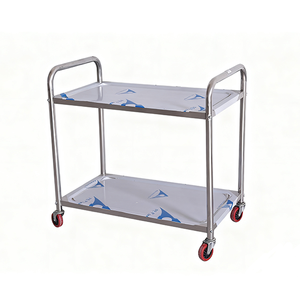
Eco-Friendly Customized Two-Layer Hand-Pushing Kitchen Serving Cart
Fully customizable eco-friendly steel dining push cart offering noise-dampened undershelf padding, modular side accessory attachments, and sleek brushed metallic finishing.
Global Manufacturing Authority & Supply Scale
Backing international commercial clients with rigorous automotive-grade engineering, standardized ISO quality control, and robust global logistics execution.
Why Global Procurement Teams Choose Our Mobility Platform
From low-speed electric neighborhood vehicles (LSVs) and motorized mobile kiosks to heavy-duty institutional cleaning trolleys, our engineering standards deliver uncompromised reliability.
Automotive-Grade Structural Engineering
Every utility cart chassis, commercial food trailer axle, and transport frame undergoes finite element analysis (FEA) testing. Stainless steel platforms utilize premium 201/304 rust-resistant alloys, while plastic models employ high-density polypropylene (PP) formulated to resist UV breakdown and chemical sanitizers.
Advanced Powertrain & Lithium Integration
For electric mobility carts and motorized food vehicles, we integrate zero-maintenance LiFePO4 (Lithium Iron Phosphate) energy storage system modules. Featuring smart battery management systems (BMS), rapid thermal dissipation, and international safety compliance, our electric mobility range ensures long operational uptime.
Full OEM/ODM Factory Customization
We support extensive commercial customization options. From dimensional sizing, custom color match powder coating, and specialized drawer configurations for medical carts to integrated plumbing, electrical wiring harnesses, and DOT safety equipment for food trailers and electric shuttles.
Regulatory Compliance & Certifications
Navigating international trade standards requires rigorous compliance. Our products meet global regulatory frameworks including CE markings, DOT road-legal readiness for motorized vehicles, NSF-compliant food service surfaces, and ISO9001 certified quality management protocols.
Global Supply Chain & Dealer Support
Operating with an established international spare-parts pipeline, fast lead times, and comprehensive service documentation. We provide commercial buyers, resort operators, healthcare purchasing agents, and regional distributors with reliable after-sales technical support.
Ergonomic & Operational Efficiency
Commercial mobility carts are built to reduce worker fatigue and workplace injuries. Our cart platforms feature push-bar heights designed around ergonomic standards, heavy-duty foot-locking brakes, non-marking TPR/PU caster wheels, and optimized structural balance under load.
Future Procurement Trends in Mobility & Utility Carts
Key market shifts shaping global commercial purchasing decisions over the next five years.
1. Electrification & Transition to Maintenance-Free Lithium Chemistries
The global commercial mobility cart landscape is undergoing a massive shift from traditional lead-acid battery technology toward specialized Lithium Iron Phosphate (LiFePO4) systems. Commercial buyers are increasingly prioritizing total cost of ownership (TCO) over initial capital expenditure. Lithium energy storage delivers up to 3,500 lifecycle charge cycles compared to just 500–800 cycles in lead-acid alternatives. Furthermore, lithium systems eliminate battery acid watering, terminal corrosion maintenance, and off-gassing during indoor charging cycles—critical considerations for indoor hospital environments, hotel corridors, and enclosed food production hubs.
2. Modular Structural Architecture & Interchangeable Toolsets
Modern enterprise procurement teams are moving away from single-purpose mobility carts toward modular chassis frameworks. Facilities demand trolley platforms that can be quickly reconfigured with lockable medical drawers, linen shelf extensions, waste bag modules, or electrical charging power strips. Modular steel and PP plastic design allows procurement managers to standardize their base cart fleet while customizing upper superstructures to match localized department workflows.
3. Strict Sanitation, Antimicrobial Materials & Wash-Down Compliance
In the post-pandemic commercial hospitality and medical procurement sectors, cart material selection is directly tied to infection control and hygiene protocols. High-grade 304 and 316 stainless steels, alongside non-porous antimicrobial polypropylene polymers, have become essential. Future procurement standards mandate seamless welded construction or rounded internal corners to prevent bacterial trapping, allowing high-pressure wash-down cleaning without structural degradation.
4. Urban Mobile Micro-Commerce & Turnkey DOT Commercial Vehicles
The rise of decentralized dining, resort popup bars, and urban street food vending has fueled demand for road-ready street-legal food trailers and motorized tricycle carts (such as the Piaggio Ape style). Commercial buyers expect factory-installed turnkey infrastructure—including certified electrical sub-panels, gray-water holding tanks, NSF food prep surfaces, and DOT vehicle identification numbers (VINs)—ensuring seamless local municipal licensing.
Mobility Cart Category Specification & Application Benchmark
Compare technical specifications, payload capacities, and primary commercial deployment environments.
| Cart Category | Primary Material | Typical Payload | Key Certifications | Ideal Application Environment |
|---|---|---|---|---|
| Commercial Mobile Food Trailers | 304 Stainless Steel & Galvanized Frame | 800 kg - 2,500 kg | CE, DOT, VIN Registered | Street vending, outdoor resorts, event catering |
| Hotel Janitorial & Housekeeping | High-Density Polypropylene (PP) | 150 kg - 300 kg | ISO9001, RoHS | Hotels, resort villas, cruise ships, office buildings |
| Commercial Kitchen & Dining Trolleys | 201 / 304 Grade Stainless Steel | 100 kg - 250 kg | NSF Compliant, CE | Commercial kitchens, banquets, hospital dining |
| Medical & Salon Tool Carts | Powder-Coated Steel & ABS Drawers | 80 kg - 150 kg | Medical Grade CE, ISO13485 | Dental clinics, beauty salons, hospitals, labs |
| Low-Speed Electric Utility Vehicles | Aluminum / Steel Alloy Chassis | 400 kg - 800 kg | DOT LSV, EEC, CE | Gated communities, campus logistics, resorts |
Frequently Asked Commercial Procurement Questions
Expert answers to key technical, logistical, and customization questions asked by enterprise buyers.
What key criteria should be evaluated when selecting a mobility cart supplier?
Procurement managers should evaluate suppliers based on structural material standards (e.g., 304 stainless steel vs basic 201 steel, virgin high-density PP vs recycled brittle plastics), factory certification credentials (ISO9001, CE, DOT, NSF), custom OEM engineering capabilities, lead times, and global spare parts availability. Evaluating real-world payload tests and caster wheel durometer ratings is also vital for long-term operational performance.
How do stainless steel grades (201 vs 304) impact long-term operational lifespan?
Grade 304 stainless steel contains higher nickel and chromium content, rendering it highly resistant to corrosion, organic food acids, harsh sanitizers, and high-moisture commercial kitchen wash-downs. Grade 201 is cost-effective for dry indoor service environments but may develop surface oxidation over time if exposed to acidic chemicals or outdoor marine air. We offer both grades to match budgetary and environmental requirements.
Are mobile food trailers and motorized carts street-legal in international markets?
Yes. Commercial food trailers and motorized carts engineered for road transport are built with DOT-compliant lighting systems, safety chains, brake systems, shatterproof windscreens, and assigned 17-digit Vehicle Identification Numbers (VINs). This documentation allows commercial buyers to register and license the vehicles with local transportation authorities in North America, Europe, Australia, and beyond.
What are the advantages of integrating lithium battery packs into motorized cart fleets?
Lithium LiFePO4 batteries deliver significantly longer cycle life (up to 3,500+ charge cycles), 70% lighter weight, faster recharging capabilities, and zero battery watering maintenance compared to legacy lead-acid batteries. In addition, integrated Smart BMS protection prevents thermal runaway and voltage drops under heavy load, ensuring consistent hill-climbing power and all-day utility.
What minimum order quantities (MOQs) and lead times apply for custom OEM orders?
Standard stock cart models can ship within 7–14 business days. For customized OEM/ODM projects—including tailored dimensions, custom corporate color matching, specialized electrical wiring, or branded vinyl wraps—production lead times typically range from 20 to 35 days depending on batch volume and design complexity. Flexible MOQs are available for enterprise fleet trial runs.
Partner with a Leading Global Mobility Cart Manufacturer
Whether you require a custom commercial food trailer fleet, medical tool trolleys, or high-capacity hotel janitorial carts, our engineering team is ready to support your technical specifications.