Factory-Direct Lifted & Utility Carts
Explore our premier line of OEM commercial trolley carts, lifted street-legal LSVs, and specialized mobile service vehicles engineered for rigorous commercial and residential deployment.
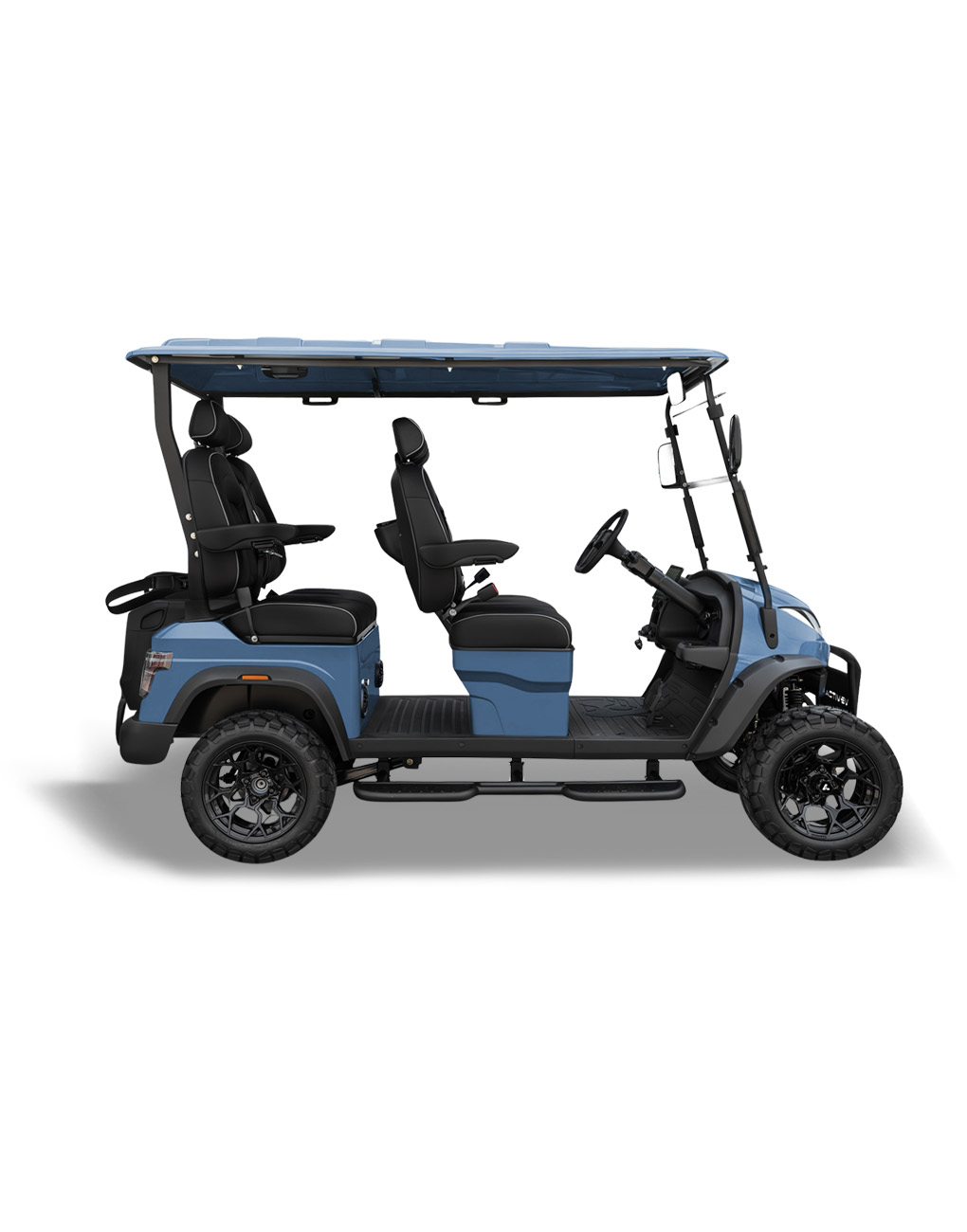
ActivEV Pulse 4-Passenger Lifted Electric Cart
High-clearance street legal LSV equipped with lithium battery pack, rugged off-road tires, and DOT-certified safety components.
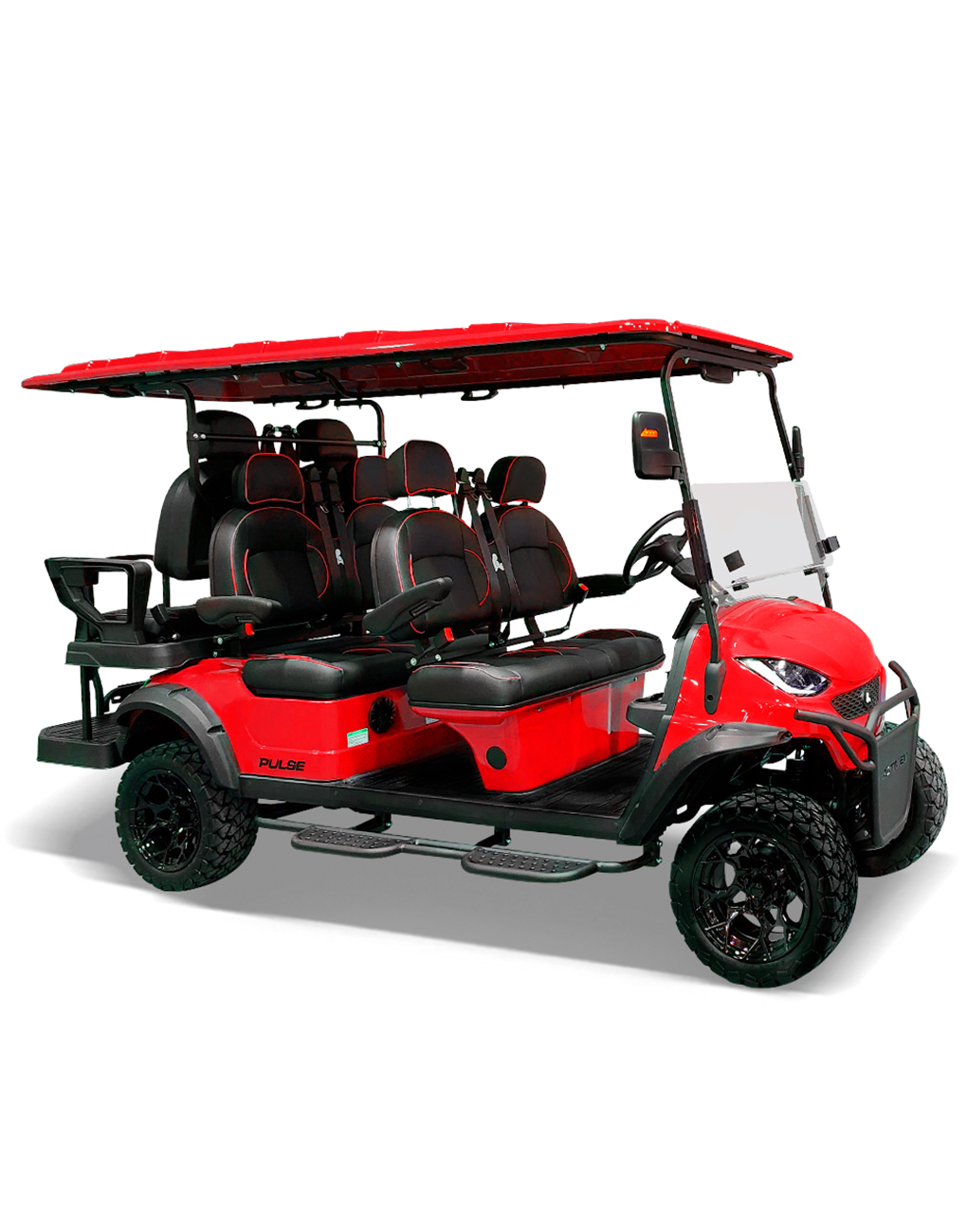
ActivEV Pulse 6-Passenger Lifted Resort Shuttle
Heavy-duty extended chassis designed for resort transport, community shuttle operations, and off-road passenger carriage.

Commercial Mobile Trailer Coffee & Bar Cart
Fully customized commercial mobile restaurant trailer with full kitchen integration, DOT/CE certification, and stainless steel interior.

Commercial Hotel Housekeeping & Janitorial Cart
Heavy-duty room service cleaning trolley featuring reinforced refuse collection bags, multi-tier storage, and non-marking casters.

Commercial 33L Indoor/Outdoor Utility Cart
Impact-resistant PP material housekeeping trolley with adjustable ergonomic handle and 4-wheel stability for rugged operations.

Moto Piaggio Ape Mobile Coffee & Catering Cart
Retro-style electric mobile commercial catering vehicle fitted with espresso machinery, refrigeration modules, and display counters.

2-Tier Stainless Steel Catering & Dining Cart
Precision-engineered 304 stainless steel service trolley designed for hotel dining rooms, industrial kitchens, and healthcare facilities.

3-Layer Precision Medical & Salon Storage Cart
Metal medical-grade utility trolley equipped with power socket integration, silent rolling casters, and high-capacity organizer trays.
Global Sourcing Benchmarks & Manufacturing Intelligence
Key operational indicators evaluating the world's leading lifted cart factories, technical OEMs, and specialized utility cart assembly plants.
Executive Whitepaper: Evaluating the Top 10 Lifted Cart Factories
The global demand for high-clearance electric carts, personal transportation vehicles (PTVs), low-speed vehicles (LSVs), and specialized commercial utility trolleys has undergone unprecedented expansion over the past five years. As urban centers, master-planned gated communities, coastal resorts, and industrial facilities transition toward zero-emission micro-mobility platforms, enterprise buyers and distributor networks must navigate an increasingly complex global supply chain.
Selecting a top-tier manufacturing partner requires going beyond superficial aesthetics. A comprehensive evaluation of the Top 10 Lifted Cart Factories involves strict auditing of chassis structural integrity, suspension geometry, automotive-grade cathodic dip coating (e-coating), electrical loom protection, and battery management system (BMS) sophistication. This whitepaper establishes a data-driven framework to empower commercial procurement managers, fleet operators, and dealership principals with actionable sourcing intelligence.
1. Chassis Engineering & Suspension Dynamics in Lifted Architecture
Unlike standard golf carts fitted with aftermarket lift kits, premier OEMs design dedicated high-clearance chassis frames built to withstand modified roll center physics and elevated center of gravity (CG). Factory-engineered lifted carts feature redesigned double A-arm front independent suspension, heavy-duty hydraulic shock absorbers with adjustable pre-load, and reinforced rear leaf spring packs.
- Structural Steel Selection: Top factories utilize high-tensile carbon steel (such as Q235B or Q345B) or robotic-welded aviation-grade 6061-T6 aluminum box frames to achieve optimal strength-to-weight ratios.
- Anti-Corrosion Surface Treatment: Commercial longevity hinges on frame treatment. Leading facilities implement a multi-stage electrophoretic deposition (ED) process, followed by thermosetting powder coating, providing over 1,500 hours of salt spray resistance (ASTM B117 benchmark).
- Handling Stability & Geometry: Factory-aligned steering knuckles and castor/camber geometry prevent severe bump steer, tire scrubbing, and high-speed instability commonly associated with third-party retrofits.
2. Advanced Powertrain & LiFePO4 Lithium Battery Management
The transition from legacy flooded lead-acid batteries to Lithium Iron Phosphate (LiFePO4) chemistry represents the single largest technical leap in utility cart manufacturing. High-grade factories integrate automotive-tier battery cells (such as CATL, EVE, or BYD) managed by intelligent CAN-bus protocol BMS units.
| Technical Specification | Tier-1 OEM Factory Standard | Assembled / Low-Cost Trader | Procurement Advantage |
|---|---|---|---|
| Battery Chemistry | LiFePO4 with Smart BMS (CAN 2.0B) | Flooded Lead-Acid or Unbranded Li-ion | +3,500 Cycle Life, Zero Maintenance |
| Chassis Manufacturing | Robotic MIG Welded + E-Coat Dip | Manual Arc Welding + Spray Paint | Structural Warranty & Rust Immunity |
| Motor & Controller | AC Induction / PMSM 5kW-7kW (Navitas/Enpower) | DC Brushed Motor 3kW (Generic) | Steeper Gradeability & Thermal Control |
| Regulatory Hardware | DOT Windshield, VIN, AS1 Glass, Seat Belts | Basic Acrylic Windshield, No VIN | Turnkey Street Legal LSV Registration |
| Quality Assurance | 100% Dyno, Water Ingress & Brake Testing | Spot Visual Checking | Drastically Reduced Warranty Claims |
Future Procurement Trends in Cart Manufacturing (2026–2030)
Analyzing global market shifts, technological innovations, and legislative trends reshaping enterprise cart sourcing over the next decade.
High-Voltage 72V & Solid-State Architecture
Commercial cart fleets are rapidly moving from standard 48V systems to 72V and 96V high-efficiency drivetrains. High voltage reduces amperage draw across wiring looms, minimizing heat dissipation, expanding operational range by up to 35%, and enabling rapid DC fast charging capabilities.
IoT Telematics & Remote Fleet Management
Modern commercial procurement demands integrated telematics modules. Next-generation factory models incorporate GPS tracking, remote battery diagnostics, geo-fencing speed restrictions, and automated maintenance alerts via cloud software applications, ideal for resorts and corporate campuses.
Modular Multi-Utility Chassis Design
Factory production lines are pivoting toward unified modular platforms. A single base chassis can now be rapidly configured at the factory for 4-passenger forward-facing seating, rear flip-flop cargo beds, enclosed mobile catering pods, or specialized janitorial equipment setups.
Strict Regulatory Compliance (DOT / EEC / CE)
As municipal law enforcement tightens regulations on Low Speed Vehicles (LSVs) and Personal Transportation Vehicles (PTVs), factory compliance with Federal Motor Vehicle Safety Standard 500 (FMVSS 500), EEC L7e approval, and DOT VIN generation has become mandatory for commercial importers.
Eco-Friendly Sustainable Materials
Leading factories are eliminating virgin plastics by utilizing recyclable polypropylene polymers, bio-based seat upholstery, non-toxic waterborne acrylic coatings, and closed-loop water filtration systems throughout spray painting and electro-plating assembly stages.
Direct Factory OEM/ODM Co-Development
Global buyers are bypassing multi-layer trading middlemen. Enterprise procurement directors increasingly establish direct OEM co-engineering partnerships with top factories to customize body molds, gear ratios, lighting signatures, and branded touchpoints from the ground up.
Enterprise Factory Capabilities & Engineering Leadership
Supported by decades of combined engineering expertise and backed by North American technical standards (including Bintelli-backed ActivEV manufacturing protocols), our factory network represents the pinnacle of utility cart engineering. Operating across state-of-the-art facilities, our production ecosystem seamlessly blends automated robotics with rigorous human inspection.
Advanced R&D & Custom Prototyping
Our dedicated team of automotive structural engineers, electrical systems designers, and CAD technicians transform custom concepts into operational reality. From designing heavy-duty 4-wheel independent lifted suspensions to crafting custom stainless steel mobile food trucks, we deliver turnkey solutions tailored to target operational environments.
Strict ISO9001 Quality Control
Every vehicle leaving our assembly lines undergoes a comprehensive 48-point diagnostic assessment. This includes computerized chassis alignment, dyno motor performance evaluation, high-pressure water ingress chamber testing (IP67 verification), and full battery thermal logging under heavy load simulation.
Global Spare Parts Pipeline & Dealer Support Network
We recognize that procurement does not end upon delivery. Long-term operating efficiency relies on consistent spare parts availability and reliable field documentation. Our global logistics hub maintains extensive inventory reserves for every vehicle platform—including replacement suspension arms, wiring harnesses, controller modules, transaxles, and optical lens assemblies. Authorized dealers and corporate fleet technicians enjoy direct access to factory schematics, service manuals, and rapid-dispatch parts fulfillment.
Frequently Asked Questions (FAQ)
Essential questions answered regarding factory sourcing, minimum order quantities, compliance certifications, and lifted cart physics.
1. What distinguishes a true factory-built lifted cart from a standard cart with an aftermarket lift kit?
A factory-built lifted cart is engineered from the drafting board for high clearance. The frame geometry, steering knuckle angle, brake line length, and shock absorber valving are specifically calibrated to accommodate larger wheel offsets and elevated center of gravity. Retrofitted carts often suffer from severe bump steer, rapid bushing wear, compromised braking stability, and frame stress fractures due to uncalibrated suspension lever arms.
2. What documentation and hardware are required for a cart to be street-legal (LSV) compliant?
To qualify as a Low Speed Vehicle (LSV) under US DOT FMVSS 500 standards or international guidelines, the cart must feature a 17-digit Vehicle Identification Number (VIN), DOT-approved safety glass windshield with wiper, three-point seat belts for all seating positions, LED headlights, tail lights, brake lights, turn signals, horn, dual exterior rearview mirrors, reflector panels, and a maximum speed capability of 20–25 mph.
3. Why is LiFePO4 chemistry preferred over NMC or Lead-Acid for commercial utility carts?
Lithium Iron Phosphate (LiFePO4) offers exceptional thermal and chemical stability, completely eliminating the risk of thermal runaway associated with standard lithium-ion (NMC) chemistries under high ambient temperatures. Compared to lead-acid, LiFePO4 reduces battery pack weight by up to 70%, provides 3,500+ full charge cycles (vs. 500 cycles), recharges 3x faster, and requires zero water maintenance or acid corrosion management.
4. What are the typical factory lead times and Minimum Order Quantities (MOQ) for OEM orders?
Standard factory MOQs for custom-branded or custom-configured utility carts typically start at 2 to 4 units (or 1x20GP container load). Production lead times range from 15 to 25 business days depending on specific OEM customizations (such as custom paint codes, custom upholstery stitching, or specialized food service catering pods), plus maritime transit time.
5. How do factory warranties operate for international BB importers and dealers?
Our OEM factory supply agreements include comprehensive warranty coverage: 5 years on lithium battery packs, 3 years on structural frame components, and 1 to 2 years on motor, controller, and transaxle assemblies. Warranty parts are dispatched via priority air freight directly to your service center, supported by digital technical assistance and video-guided diagnostic procedures.
6. Can specialized commercial utility carts (e.g., food trucks, housekeeping trolleys) be customized?
Yes. Our factory ODM/OEM engineering team specializes in tailoring utility bodies to exact operational needs. For food trailers and mobile bar carts, we integrate NSF-certified 304 stainless steel worktops, grease traps, water supply/waste tanks, and electrical wiring panels. For housekeeping carts, we offer customizable compartment dividers, quiet casters, and specialized lockable storage modules.
Partner Direct With Leading Cart Manufacturing Operations
Connect directly with our engineering and procurement team to request comprehensive factory catalogs, wholesale pricing tiers, technical blueprints, and OEM project quotes.