Featured Custom OEM Street Legal & Commercial Solutions
Engineered to exceed DOT, CE, and international homologation standards. Select a commercial platform below to initiate custom OEM/ODM manufacturing specifications.

HONLU Custom Mobile Bar & Food Truck Trailer Commercial Kitchen Cart
Full commercial stainless steel kitchen installation with DOT/CE road certification. Includes integrated water systems, power distribution, and heavy-duty chassis.

Commercial Hotel Room Service Janitorial & Housekeeping Trolley Cart
Industrial-grade steel chassis with reinforced refuse bag holders and multi-tiered storage. Smooth non-marking caster wheels engineered for high-traffic hotel environments.

33L High-Capacity 4-Wheel Adjustable Handle Commercial Housekeeping Cart
Constructed from impact-resistant PP polymer with adjustable ergonomic handling. Designed for indoor and outdoor resort, hospital, and restaurant service operations.

Moto Piaggio Ape Mobile Coffee & Catering Electric Food Truck
Iconic retro-styled mobile catering vehicle outfitted with complete coffee station infrastructure, integrated power systems, and street-legal driving capabilities.

2-Tier Stainless Steel Movable Commercial Kitchen Dining Service Trolley
Heavy-load capacity catering trolley crafted from corrosion-resistant stainless steel. Noise-reduction silent casters for seamless dining room and banqueting service.

3-Layer Dental & Salon Beauty Tool Storage Trolley with Power Socket
Precision medical-grade metal construction featuring integrated electrical outlets, smooth-rolling lockable casters, and specialized tray compartments for clinical tools.

Wholesale Commercial Catering 201/304 Stainless Steel Tubular Trolley
High-rigidity tubular framework designed for back-of-house kitchen transport, laundry facilities, and heavy industrial utility handling with maximum payload stability.
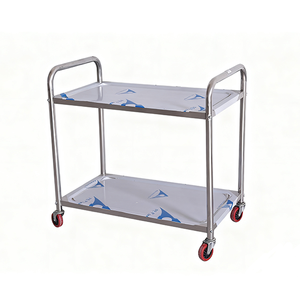
Two-Layer Customized Eco-Friendly Commercial Kitchen Serving Trolley
Precision-engineered Hanxing silvery finish trolley offering customizable dimensions, eco-friendly materials, and optimized ergonomics for institutional catering operations.
Navigating Global Standards for Custom Street Legal & Utility Vehicles
An authoritative breakdown of regulatory compliance, structural engineering integrity, and international market access requirements for OEM/ODM procurement officers.
Critical Sourcing Insight: The Definition of "Street Legal" (LSV/NEV)
In international procurement, qualifying a vehicle as Street Legal demands strict adherence to Low-Speed Vehicle (LSV) standards under U.S. Federal Motor Vehicle Safety Standard FMVSS 500 and European Union EEC L7e/L6e homologation. OEM manufacturers must integrate a certified 17-digit Vehicle Identification Number (VIN), DOT-stamped safety glass windshields, automotive-grade seat belts, three-point mirror assemblies, LED lighting arrays, and speed-governed electric powertrains rated for maximum speeds of 20 to 25 mph (32 to 40 km/h).
As enterprise procurement shifts toward zero-emission urban micro-mobility and specialized mobile services, selecting an experienced Custom OEM Street Legal Manufacturer & Exporter is paramount. Modern commercial entities—ranging from luxury resort chains and municipal transport systems to mobile culinary entrepreneurs—require vehicles that seamlessly bridge heavy-duty utility with stringent public road safety protocols.
Custom OEM engineering goes far beyond aesthetics. It dictates the structural yield strength of the chassis frame, the thermal management efficiency of the electric powertrain, and the hygienic compliance of integrated commercial catering suites. By leveraging advanced robotic CAD/CAM fabrication, laser tube cutting, and automated powder coating processes, premier exporters guarantee that every vehicle leaving the factory floor maintains structural stability, anti-corrosion resilience, and operational safety over decades of continuous field deployment.
Enterprise OEM/ODM Engineering Core Competencies
How our integrated factory infrastructure guarantees superior product lifecycle, lower total cost of ownership (TCO), and absolute compliance.
DOT & CE Certified Chassis Infrastructure
All mobile platforms and trailers utilize hot-dip galvanized high-tensile steel frames. Chassis geometry is stress-tested to endure maximum payload dynamics while meeting international homologation road safety criteria.
LiFePO4 & Smart BMS Integration
Our electric LSVs and mobile food trucks deploy maintenance-free Lithium Iron Phosphate (LiFePO4) energy systems equipped with automotive CAN-bus Smart Battery Management Systems (BMS) for extended thermal stability and rapid charging.
Food-Grade 304 Stainless Steel Fabrication
Mobile bar, catering, and kitchen trolleys are constructed using certified food-grade 304 stainless steel. Non-porous, corrosion-resistant surfaces comply strictly with NSF/FDA sanitation requirements for food service operations.
Custom Modular Architectural Design
From dimensions and layout to power voltage, interior equipment, and exterior branding, our modular CAD assembly lines allow complete custom tailoring for corporate fleets and specialized commercial buyers.
Global Export Logistics & VIN Documentation
We provide complete turn-key export packages, including Certificate of Origin, VIN generation, Customs declaration, and seaworthy steel-framed crate packaging to prevent transit damage to any port worldwide.
Global Procurement & Technology Trends Shaping the Industry
Macro-economic shifts, sustainability mandates, and technological developments governing electric micro-utility and street-legal vehicle sourcing over the next decade.
1. Acceleration of High-Voltage Lithium (LiFePO4) Transition
The global commercial cart and low-speed vehicle market is rapidly phasing out legacy flooded lead-acid batteries in favor of sealed Lithium Iron Phosphate (LiFePO4) energy cells. Lead-acid systems suffer from high total weight, toxic water maintenance requirements, thermal sensitivity, and voltage sag under heavy load. Conversely, lithium-ion platforms offer 3x the cycle life (>3,500 full discharge cycles), zero terminal maintenance, 70% weight reduction, and constant voltage output through 95% of battery discharge.
For global fleet managers, this shift reduces lifecycle operating costs by over 40% while enabling fast-charging capabilities (0-80% charge in 2 hours), making round-the-clock hotel, resort, and municipal utility operations economically viable.
2. Modular Customization & Multi-Functional Utility Chassis
Modern buyers no longer seek single-purpose utility carts. The trend leans heavily toward universal modular chassis designs capable of switching rear body modules—converting a passenger low-speed vehicle into a housekeeping trolley, room service delivery shuttle, or mobile catering unit within minutes.
Custom OEM exporters who engineer standardized quick-release mounting points and universal wiring harness connectors empower resort and commercial operators to adapt their mobile assets dynamically across peak seasonal demands.
3. Hygienic Material Science in Mobile Hospitality Equipment
Post-pandemic hygiene standards have elevated material selection criteria for commercial dining trolleys, hotel janitorial carts, and mobile food trailers. Municipal health inspectors and international hotel audit boards demand non-porous, antibacterial surfaces that withstand high-pressure chemical sanitization.
Leading OEM manufacturers are integrating high-density Polypropylene (PP) polymers engineered with UV stabilizers and food-grade 304/316 seamless stainless steel tubing. These advanced materials eliminate bacterial harbor points, resist chemical pitting, and maintain visual elegance under grueling commercial laundry and food service environments.
4. Stringent Global Street-Legal Homologation & IoT Telematics
Municipalities worldwide are establishing dedicated low-speed electric vehicle corridors in urban centers and gated communities. Consequently, vehicles must meet standardized homologation criteria including automotive lighting standards, dual-circuit hydraulic braking, and reinforced rollover protection structures (ROPS).
Furthermore, enterprise fleet buyers are mandating integrated IoT telematics modules. OEM export vehicles now regularly feature built-in GPS tracking, remote battery diagnostics, geo-fencing speed limiters, and fleet utilization software interface capabilities directly accessible via cloud dashboards.
B2B Total Cost of Ownership (TCO) & Factory Sourcing Framework
A systematic procurement evaluation model for global distributors, commercial importers, and enterprise buyers evaluating OEM supply contracts.
When evaluating a potential Custom OEM Street Legal Manufacturer & Exporter, relying solely on initial unit FOB price creates substantial operational risk. Procurement managers must evaluate lifetime expenditure using a structured Total Cost of Ownership (TCO) matrix:
Frequently Asked Technical & Sourcing Questions
Direct answers addressing regulatory compliance, custom manufacturing SOPs, shipping logistics, and aftermarket spare parts availability.
Q1: What compliance documentation is required to register custom OEM street-legal carts in North America and Europe?
For North American road registration as a Low-Speed Vehicle (LSV), vehicles require a Manufacturer's Certificate of Origin (MSO/COO), a valid 17-digit World Manufacturer Identifier (WMI) VIN, DOT-approved safety glass windshields, DOT-certified tires, seat belts, and side mirrors meeting FMVSS 500 standards. For European distribution, vehicles must comply with EEC/CoC (Certificate of Conformity) regulations under L6e or L7e light vehicle classifications, including CE machinery safety directives.
Q2: Can mobile food truck trailers and coffee carts be customized for specific country electrical and plumbing codes?
Yes. As a custom OEM exporter, we engineer electrical power systems configured to target market specifications—including 110V/60Hz single-phase (US), 220V/50Hz (EU/Asia), or 380V three-phase industrial inputs with localized circuit breakers and plug types. Water supply infrastructure includes dual clean/wastewater tanks, certified food-grade PEX tubing, automatic demand water pumps, and electric instant water heaters meeting regional health authority requirements.
Q3: Why is Lithium Iron Phosphate (LiFePO4) preferred over standard Lithium-ion (NMC) or Lead-Acid batteries?
LiFePO4 chemistry is chemically and thermally stable, virtually eliminating thermal runaway or fire risks associated with NMC cells under high ambient temperatures. Compared to lead-acid batteries, LiFePO4 delivers 3 to 5 times longer cycle life (3,500+ cycles), operates without maintenance (no battery watering), recharges significantly faster, and reduces overall vehicle weight by up to 300 kg, dramatically improving acceleration, braking distance, and payload capacity.
Q4: What is the standard OEM manufacturing lead time, and how are prototype samples handled?
Standard production lead time for full container load (FCL) OEM vehicle orders is typically 25 to 35 days post 3D CAD approval and deposit receipt. For custom prototype development, our engineering team produces full 3D CAD renderings and stress simulations within 7 business days. Upon sample approval, physical prototype fabrication takes 15 to 20 days prior to mass production clearance.
Q5: What is the practical difference between 201 and 304 stainless steel in commercial service trolleys?
304 Grade Stainless Steel contains a higher nickel content (minimum 8%) and chromium (18%), granting exceptional corrosion resistance against acids, salts, moisture, and aggressive sanitizing chemicals. It is mandatory for food contact surfaces and high-humidity environments. 201 Stainless Steel utilizes manganese to replace nickel, offering high structural strength at a lower cost, suitable for dry room service, laundry, or general utility transport carts where direct acidic food exposure is minimal.
Q6: How are replacement parts, warranty claims, and technical servicing supported internationally?
We provide a comprehensive factory warranty covering chassis frames (5 years), lithium power packs (3 to 5 years), and electrical controllers/motors (2 years). International fleet clients receive a wearable spare parts package (brake pads, switches, tires, fuses) packaged directly with each vehicle container shipment. Additionally, detailed digital parts manuals, wiring diagrams, and direct factory technical support via video call ensure seamless local servicing.
Partner with a Certified Custom OEM Street Legal Exporter
Whether you require a custom commercial food truck fleet, hotel housekeeping trolleys, or street-legal low-speed electric vehicles, our engineering team is ready to review your CAD drawings and technical specifications.