Top-Rated Low Speed Carts & Utility Vehicles
Direct-from-factory wholesale solutions tested for commercial durability, international safety compliance, and custom operational needs.

HONLU Commercial Mobile Bar & Food Truck Cart with Full Kitchen
Heavy-duty low-speed trailer unit featuring 304 stainless steel kitchen counter, DOT & CE certification, integrated water system, and custom layout.
Get a Quote
Commercial Hotel Room Service Janitorial Housekeeping Cleaning Trolley
Ergonomic multi-compartment cleaning cart equipped with heavy-duty refuse bags, non-marking casters, and high-impact structural framework.
Get a Quote
33L Large Capacity 4-Wheel Adjustable Handle PP Housekeeping Cart
Weatherproof polypropylene construction for indoor and outdoor commercial resort use. Features ergonomic push handle and modular organizers.
Get a Quote
Moto Piaggio Ape Low-Speed Electric Food Truck & Mobile Coffee Shop
Vintage-styled electric mobile vending cart equipped with espresso equipment setup, refrigeration bay, and low-speed road homologation.
Get a Quote
2-Tier Commercial Kitchen Dining Cart & Movable Service Trolley
Heavy-duty stainless steel build with silent swivel wheels. Designed for high-volume kitchen operations, banquet facilities, and catering halls.
Get a Quote
3-Layer Socket Beauty & Medical Salon Mobile Storage Trolley Stand
Precision steel construction with integrated electrical sockets, smooth-gliding locking wheels, and chemical-resistant powder finish.
Get a Quote
Wholesale Commercial Catering 201/304 Stainless Steel Round Tube Trolley
High-rigidity round tube frame engineered for maximum load bearing, noise reduction dampers, and anti-corrosion long service life.
Get a Quote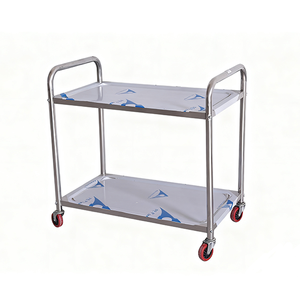
Two-Layer Stainless Steel Eco-Friendly Customized Kitchen Serving Cart
Hanxing silvery series commercial serving cart offering custom dimensions, food-grade contact surfaces, and ultra-quiet rolling chassis.
Get a Quote1. Executive Summary & Global Sourcing Landscape
The global demand for Low-Speed Vehicles (LSVs), commercial utility carts, mobile hospitality units, and specialized industrial trolleys has undergone a structural transformation. Driven by stringent carbon neutrality mandates, rising urban micro-mobility needs, and operational efficiency requirements across resorts, campuses, and industrial facilities, international buyers increasingly rely on specialized manufacturing clusters in China.
As a leading supplier ecosystem, Chinese factories produce over 45% of the world’s low-speed electric mobility platforms and commercial stainless-steel utility solutions. Modern manufacturing infrastructure combines advanced lithium-iron-phosphate (LiFePO4) energy storage integration with high-precision robotic welding, laser cutting, and automated powder coating processes.
Information Gain Key Insight: Procurement strategies have evolved beyond simple purchase price evaluation. Modern global distributors now assess total cost of ownership (TCO), chassis anti-corrosion ratings, battery management system (BMS) telemetry, and global regulatory compliance (including DOT, CE, EEC, and OSHA standards) during supplier vetting.
When sourcing low-speed equipment—ranging from street-legal 2-to-6 passenger lithium carts like the ActivEV Pulse series to heavy-duty 304 stainless steel kitchen trolleys—buyers must evaluate supplier capabilities in custom chassis geometry, payload distribution, structural fatigue tolerance, and international supply chain logistics.
2. Engineering Excellence & Manufacturing Standards
High-reliability low-speed vehicles and commercial trolleys require precise material selection and engineering practices. China’s premier factories deploy modern metallurgical and electrical engineering standards to ensure equipment survives intense commercial operational cycles.
A. Electric Low-Speed Vehicle Chassis & Drivetrain Architecture
Commercial LSVs and mobile food trucks utilize high-tensile carbon steel or lightweight aluminum alloy ladder-frame chassis. Frames undergo electro-phoretic dip (ED) coating and zinc-rich powder topcoats to guarantee corrosion resistance in humid, coastal, or high-salinity environments. Drivetrains feature high-efficiency AC induction or Permanent Magnet Synchronous Motors (PMSM) paired with smart controllers for smooth torque delivery on steep inclines.
Smart LiFePO4 Systems
Integrated Battery Management Systems (BMS) protect against thermal runaway, cell imbalance, over-discharge, and rapid charge degradation.
Homologation Safety
Equipped with DOT-certified tempered glass windshields, LED road lighting, three-point seatbelts, hydraulic disc brakes, and official VIN stamping.
Commercial Steel Crafting
Utility trolleys employ SUS304/SUS201 stainless steel or UV-stabilized polypropylene with reinforced load-bearing ribbing.
B. Stainless Steel & Polypropylene Utility Trolley Fabrication
For hospitality, medical, and catering cart procurement, hygiene and structural integrity are paramount. Chinese OEM suppliers utilize 3D fiber laser cutting to achieve sub-millimeter edge tolerances. Seamless TIG welding eliminates internal voids where bacteria or corrosive moisture can accumulate, ensuring compliance with NSF and ISO 22000 food safety protocols.
| Equipment Category | Core Material Standard | Key Safety Certifications | Target Operational Lifecycle |
|---|---|---|---|
| Street Legal Electric LSVs | Robotic-Welded ED Steel Frame / Aluminum | DOT, CE, EEC-L7e, ISO9001 | 10+ Years (3,500+ Battery Cycles) |
| Mobile Kitchen & Food Trucks | SUS304 Stainless Steel Interior / Fiber Glass | CE, Food Grade Contact, DOT Trailer | 8-12 Years Commercial Duty |
| Janitorial & Housekeeping Carts | High-Density PP / Anodized Aluminum Tube | REACH, RoHS, Anti-Microbial Surface | 5-8 Years Intensive Use |
| Medical & Salon Utility Trolleys | Powder-Coated Steel / Electric Socket Housing | CE, Medical Device Class I Standard | 7-10 Years Duty Cycle |
3. 2026-2030 Future Procurement & Technology Trends
To maintain a competitive edge, wholesale importers, commercial fleet operators, and institutional buyers must align sourcing strategies with emerging technological vectors:
Trend 1: Accelerated Shift from Lead-Acid to Modular Lithium Power
Lead-acid batteries are rapidly being phased out across global markets due to their heavy weight, short cycle life (300-500 cycles), long charge times, and toxic maintenance requirements. Chinese manufacturers are standardizing modular LiFePO4 packs capable of 3,000 to 5,000 deep discharge cycles. These packs offer zero maintenance, fast charging (2-4 hours), and consistent voltage output throughout the discharge curve, reducing fleet TCO by up to 40%.
Trend 2: Telematics, Fleet IoT, and Remote Diagnostics
Modern low-speed electric fleets now integrate 4G/GPS telematics units. Commercial operators can remotely monitor real-time battery state of charge (SoC), location tracking, speed govern settings, geofencing, and automated fault alerts. This data layer allows fleet managers at resorts, campuses, and industrial zones to optimize vehicle utilization and prevent unplanned downtime.
Trend 3: Modular Body Systems & Multi-Functional Toolless Customization
Buyers are shifting toward modular chassis designs that accept interchangeable rear modules. A single electric utility platform can switch between a 4-passenger shuttle bench, a tiltable cargo box, or a enclosed housekeeping shelf unit in under 15 minutes. This versatility allows commercial operators to adjust fleet composition based on seasonal demand spikes.
Trend 4: Eco-Friendly Material Sourcing & Carbon Neutrality Compliance
European and North American buyers face growing scrutiny regarding Scope 3 supply chain emissions. Chinese suppliers are adopting eco-friendly manufacturing practices, including recycled polypropylene resins, water-based anti-corrosion coatings, solar-powered factory assembly lines, and fully recyclable aluminum structural elements.
4. OEM/ODM Supply Chain Capabilities & Enterprise Advantages
Partnering directly with established Chinese wholesale suppliers offers strategic advantages for international distributors, vehicle brands, and equipment importers:
End-to-End Customization
From initial 3D SolidWorks CAD modeling to rapid prototype stamping, factories provide full OEM/ODM flexibility on dimensions, colors, electrical specs, and logo branding.
Rigorous Quality Assurance
Every unit undergoes multi-stage inspections: salt-spray corrosion chamber testing, chassis stress simulation, waterproof enclosure testing, and electrical load burn-in.
Global Logistics & Knock-Down Options
Suppliers offer Completely Built Up (CBU) or Semi-Knock-Down (SKD) container shipping to optimize freight costs, customs duties, and local assembly workflows.
Factory OEM Assurance: Our production partners maintain spare parts availability for a minimum of 10 years post-production, guaranteeing that replacement controllers, brake pads, body panels, and structural hardware are always available for international dispatch.
5. Comprehensive B2B Procurement FAQ
Direct answers to critical questions encountered by procurement managers, fleet directors, and wholesale importers when sourcing low-speed equipment from China.
Street-legal Low-Speed Vehicles (LSVs) must comply with strict federal safety standards (such as FMVSS 500 in the US or EEC L7e in Europe). Unlike standard golf carts capped at 15 mph, LSVs reach speeds of 20-25 mph and feature mandatory automotive-grade safety equipment: DOT-approved windshield glass, three-point seat belts, high/low beam headlights, turn signals, mirrors, parking brake, horn, reverse camera, and a 17-digit Vehicle Identification Number (VIN) for highway titling and registration.
OEM customization follows a structured workflow: 1) Client provides target specifications, 2D/3D CAD drawings, or functional requirements; 2) Factory engineering team generates prototype rendering and structural stress simulations; 3) Sample unit is fabricated and subjected to client testing; 4) Upon approval, mass production tooling and jigs are locked in. Minimum Order Quantities (MOQs) for custom branding typically start as low as 2 to 5 units for vehicles and 10 to 20 units for stainless steel utility trolleys.
304 stainless steel contains 18% chromium and 8% nickel, providing superior resistance to oxidation, acidic food chemicals, and moisture corrosion. It is mandatory for food contact surfaces and high-humidity kitchen environments. 201 stainless steel substitutes manganese for nickel, making it more economical and suitable for dry indoor transport or general utility carts where direct contact with acidic liquids is minimal.
For electric vehicles and mobile trailers, importers require: 1) DOT registration confirmation and Certificate of Origin (for US titling); 2) CE Declaration of Conformity covering Machinery Directive and EMC Directive; 3) UN38.3 battery transport safety certification and MSDS documentation for lithium packs; 4) ISO 9001 factory quality audit reports. Factory export managers prepare complete documentation packages prior to vessel departure.
Standard production lead times for sample or small-batch orders range between 15 and 20 days. Full container loads (20ft/40ft HQ) take approximately 25 to 35 days depending on customization complexity. Ocean transit adds 14-25 days to North America or Europe. SKD (Semi-Knocked-Down) packaging can increase container loading capacity by up to 40%, significantly reducing freight costs per unit.
Grade-A LiFePO4 battery packs carry a 3 to 5 year factory warranty. Suppliers supply diagnostic software and spare BMS control boards with wholesale shipments. In the event of a cell defect, factory engineers remotely analyze BMS log data and dispatch replacement battery modules or assemblies via express air freight to ensure minimal operational disruption.
Partner with China's Premier Low Speed Manufacturer
Whether you are expanding a rental fleet, establishing a local dealership network, or procuring commercial hotel trolleys, our engineering team provides direct factory pricing, full custom CAD support, and reliable international delivery.