China's Commercial Electric Cart Manufacturing Intelligence
As the global transition toward zero-emission mobility accelerates across resort, hospitality, healthcare, and mobile vending sectors, China has solidified its position as the premier manufacturing ecosystem for commercial electric carts and custom utility vehicles. This whitepaper analyzes manufacturing methodologies, factory audits, technological roadmaps, and direct OEM procurement solutions for international buyers.
Top-Rated Electric Carts & Commercial Trolleys
Explore verified OEM product lines from top Chinese manufacturers. Engineered for high durability, structural integrity, and international regulatory compliance.

HONLU Commercial Mobile Bar & Food Truck Trailer
Fully customizable commercial mobile restaurant cart equipped with a complete stainless steel kitchen setup, dual-axle stability, and certified electrical wiring.

Commercial Housekeeping & Janitorial Trolley Cart
Heavy-duty resort room service cleaning cart featuring high-capacity vinyl refuse bag, non-marking swivel casters, and multi-tier linen storage racks.

33L Capacity 4-Wheel Adjustable Housekeeping Cart
Ergonomic indoor/outdoor service cart engineered with durable polypropylene body, anti-impact bumpers, and ergonomic multi-height handle positioning.

Moto Piaggio Ape Style Electric Mobile Coffee Shop Cart
Retro design electric 3-wheeler food cart tailored for street vending, gelato bars, and espresso catering with complete onboard battery power delivery.

2-Tier Stainless Steel Commercial Dining & Service Trolley
Precision-fabricated movable dining utility cart made of food-grade stainless steel with sound-dampening undercoating and high load rating.

3-Layer Medical & Salon Utility Trolley Cart with Sockets
Multifunctional white metal tool storage stand featuring integrated power outlets, smooth gliding drawer slides, and medical-grade caster locks.

Heavy-Duty Stainless Steel Round Tube Catering Cart
Wholesale restaurant and hotel kitchen transport trolley crafted from 201/304 grade stainless steel tubing for maximum torsional strength.
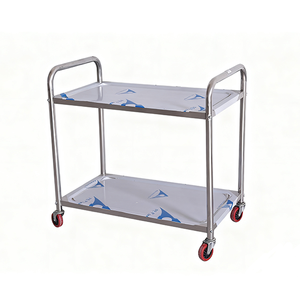
Hanxing Silvery Eco-Friendly Kitchen Serving Cart
Customizable 2-layer hand-pushing stainless steel utility cart with silent directional casters, polished chrome surface finish, and eco-certified build.
Why Sourcing Electric Carts from China Yields Unmatched ROI
The global commercial electric cart market is undergoing a rapid evolution. Sourcing directly from Chinese Tier-1 suppliers provides unmatched cost efficiency, custom engineering flexibility, and cutting-edge battery management integration.
Advanced LiFePO4 Chemistry
Leading Chinese factories have completely phased out legacy lead-acid batteries in favor of Automotive Grade Lithium Iron Phosphate (LiFePO4) battery packs featuring integrated BMS, extended 3,500+ cycle lifespans, and fast-charging capabilities.
Modular Chassis Architecture
Utilizing high-tensile robotic welding and cathodic electrophoresis coating (E-coating), Chinese suppliers engineer modular chassis systems that support standard personal transport, lifted utility frames, or heavy mobile vending bodyworks.
Rapid Production Cycle
Streamlined supply chain integration in manufacturing hubs such as Jiangsu and Zhejiang allows top factories to complete complex OEM/ODM projects within 15–25 business days, backed by strict ISO9001 quality compliance testing.
Future Procurement Trends in Commercial Electric Carts
B2B procurement officers, fleet administrators, and resort operators must stay ahead of regulatory and technological shifts when issuing supplier contracts for low-speed vehicles (LSVs) and utility carts.
Key Industry Transformations Shaping B2B Sourcing
Over the next five years, global procurement protocols for commercial electric vehicles, food trucks, and service carts will focus heavily on energy density, smart fleet telemetry, and international highway safety compliance.
1. Integration of Smart CAN-Bus Telematics
Modern commercial fleets require real-time tracking of battery health, vehicle location, payload status, and driver behavior. Top Chinese OEM manufacturers are embedding CAN-bus microcontrollers and IoT hardware natively into cart wiring harnesses.
2. DOT / LSV Street-Legal Standardizations
Procurement is shifting away from off-road golf carts toward fully street-legal Low-Speed Vehicles (LSVs) and Neighborhood Electric Vehicles (NEVs). Factory-installed DOT windshields, seatbelts, hydraulic disc brakes, and VIN assignments are now mandatory requirements.
3. Sustainable Stainless & Recyclable Polymers
Hospitality, janitorial, and catering trolleys are transitioning toward eco-friendly 304/316 food-grade stainless steel and recyclable polypropylene (PP) components to satisfy stringent ESG (Environmental, Social, Governance) procurement guidelines.
4. Solar-Assisted Auxiliary Energy Systems
Mobile vending food trucks, coffee carts, and utility shuttles are increasingly adopting roof-integrated solar arrays to trickle-charge auxiliary batteries, powering onboard appliances without depleting the main drive motor pack.
Tier-1 vs. Tier-2 OEM Electric Cart Factory Benchmark
Evaluating factory qualifications is essential to avoiding costly import delays, structural failures, or non-compliant electrical wiring. Reference our technical auditing framework below.
| Evaluation Parameter | Tier-1 Certified OEM Suppliers | Tier-2 Standard Manufacturers | Impact on Buying Organization |
|---|---|---|---|
| Chassis Coating | Automotive Electrophoretic E-Coating + Powder Coat | Basic Spray Painting / Air Dry Primer | 10+ Years Corrosion Resistance vs Rust within 12 Months |
| Battery Management (BMS) | Smart CAN-bus BMS with Thermal Auto-Cutoff | Passive BMS or Unprotected Cells | Extended Battery Lifespan & High Fire Safety Compliance |
| Motor Technology | AC Brushless / PMSM (Permanent Magnet Synchronous) | DC Brushed Motors | 30% Higher Torque Efficiency, Zero Maintenance Requirement |
| Braking Architecture | 4-Wheel Hydraulic Disc Brakes + Regenerative Brake | Rear Mechanical Drum Brakes | Shorter Stopping Distance; Enhanced Hill Safety |
| Certifications | DOT, CE, EEC, ISO9001, VIN Documentation | Partial CE or No International Certifications | Seamless Customs Clearance & Street-Legal Registration |
Why Partner with Our Verified Manufacturing Network
Combining state-of-the-art manufacturing automation with deep engineering experience (backed by industry leaders like Bintelli and Hanxing), our production facilities guarantee reliable supply chain management for global partners.
100% Quality Inspection
Every electric cart, mobile food truck, and dining trolley undergoes a rigorous 50-point factory audit, including chassis load strain testing, salt-spray anti-rust validation, and waterproofing IP67 insulation checks.
Complete OEM Customization
From frame dimensions, seating arrangements, custom stainless kitchen layouts, battery capacities, and brand logo silk-screening, our engineering teams provide comprehensive CAD/3D modeling support prior to mass production.
Global Dealer Support
We provide full spare parts cataloging, technician wiring manuals, international warranty protection, and dedicated logistics assistance to ensure your commercial operations experience zero downtime.
Common Buyer Questions & Expert Answers
Addressing essential legal, technical, and shipping considerations when ordering electric commercial carts and utility equipment from China suppliers.
What certifications are required to import electric carts into North America and Europe?
For street-legal electric carts (LSV/NEV), vehicles must comply with US DOT (Department of Transportation) FMVSS 500 standards and include 17-digit VINs. European imports require EEC/CoC (Certificate of Conformity) or CE approval for machinery directives. Commercial stainless steel trolleys require FDA/NSF food contact standards compliance.
Why is Lithium Iron Phosphate (LiFePO4) preferred over Lead-Acid for commercial carts?
LiFePO4 batteries offer a 3-4x longer lifespan (3,500+ cycles vs. 800 cycles), weigh 60% less, charge twice as fast, and require zero water refills. This results in significantly lower Total Cost of Ownership (TCO) over a 5-year operating lifecycle.
What is the typical Minimum Order Quantity (MOQ) and production lead time?
Standard MOQs for commercial electric carts and custom food trailers range from 1 to 5 units depending on customization levels. Stainless steel utility trolleys can be ordered in bulk batches of 20+ units. Lead times average 15 to 30 days from engineering sign-off.
How are replacement parts and warranty claims handled overseas?
Tier-1 factories supply 2% to 5% fast-wear spare parts with every bulk container shipment. Major components (motors, controllers, lithium batteries) carry a 2 to 5-year factory warranty with immediate express dispatch of replacement parts.
Can food truck carts be customized with specialized cooking appliances?
Yes. Custom mobile kitchen trailers (e.g., Honlu, Piaggio Ape styles) can be pre-wired for 110V/220V dual voltage power distribution, complete with custom extraction hoods, deep fryers, espresso machines, refrigeration units, and certified gas/water lines.
What anti-corrosion protection is used for coastal resort electric carts?
Vehicles built for coastal or high-humidity environments undergo hot-dip galvanization or cathodic electrophoresis (E-coating) on the steel frame, paired with stainless steel hardware, aluminum alloy rims, and marine-grade vinyl upholstery.
Connect with China's Premier Electric Cart Manufacturers
Request direct factory price lists, complete technical spec sheets, OEM customization options, and global shipping estimates for your fleet or distribution business.