Choosing among 4-Passenger Forward-Facing Golf Carts requires more than comparing speed, color, and showroom appeal. These vehicles must carry four adults comfortably while maintaining stable handling, dependable braking, and useful range. A strong model should also provide practical details, such as supportive rear seats, clear front visibility, durable suspension, and enough storage for bags or groceries.
Golf-cart industry specialist Mike Vogl puts the decision into perspective: “A good golf cart should fit the way people actually use it, not simply look impressive on a specification sheet.” That principle matters when reviewing the top four options. A cart used on private roads may need different strengths than one used around a large property, resort, or planned community. Tire design, ground clearance, turning response, and charging time can change the ownership experience.
This guide compares four leading 4-Passenger Forward-Facing Golf Carts through a practical lens. We examine comfort, power, range, safety-focused equipment, build quality, and everyday usability. No ranking is perfect. Buyers can overvalue acceleration and overlook seat support, or focus on battery size without checking charging conditions. Small details often matter most.
A forward-facing layout improves conversation and visibility, but it does not automatically guarantee a better ride. Passenger weight, terrain, weather, and maintenance habits still affect performance. The best choice is the cart that feels predictable at low speeds, remains composed on uneven paths, and supports real daily needs without unnecessary features.
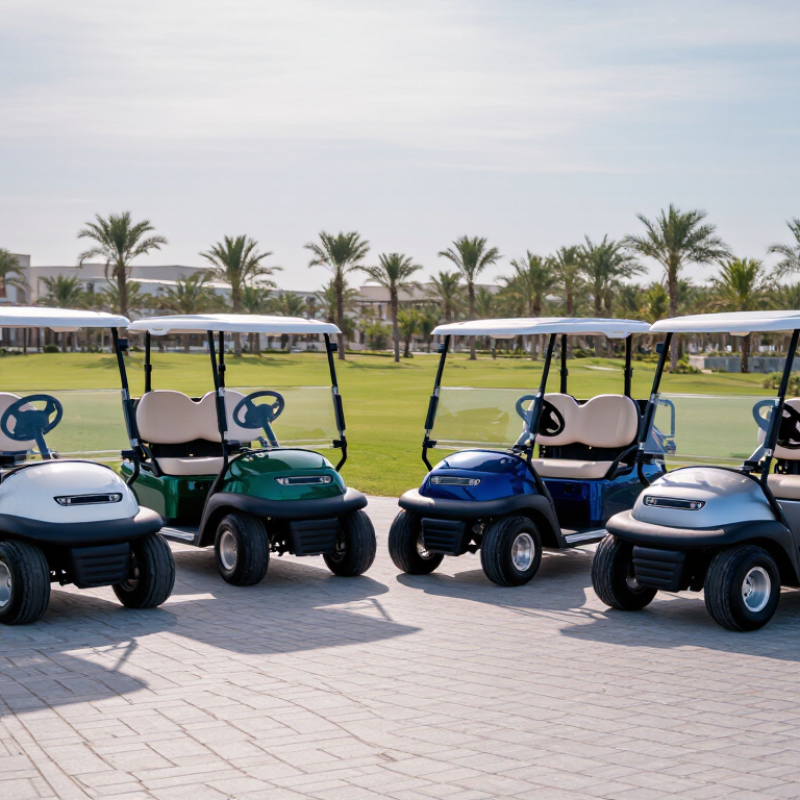
What Defines a Four-Passenger Forward-Facing Golf Cart?
A four-passenger forward-facing golf cart has two seats in front and two seats directly behind them. All four passengers face the same direction. This layout differs from models with a rear-facing bench, where passengers sit back-to-back.
The design starts with seating, but it does not end there. A true four-passenger cart needs enough legroom, shoulder space, and handholds for every rider. The frame should support the longer cabin without feeling loose on turns. Strong brakes, predictable steering, and balanced suspension matter when four adults are aboard. In my experience, a cart may look spacious in photos, yet feel cramped after a short ride. That detail is easy to overlook. A forward-facing layout also improves conversation and visibility, although the added length can make tight paths harder to navigate.
Tips: Check the distance between seatbacks, not just the listed capacity. Sit in all four positions before buying. Test the turning radius with passengers inside. Inspect the floor, roof supports, seat mounts, and step-in height. Ask for clear information about payload limits, charging time, battery condition, and service records. A useful test includes a gentle slope, a full stop, and several tight turns. Do not rely on appearance alone. Some advertised four-passenger carts use narrow rear seating, which may disappoint taller riders.
What Are the Top 4 Passenger Forward Facing Golf Carts? - What Defines a Four-Passenger Forward-Facing Golf Cart?
| Configuration | Passenger Layout | Typical Overall Length | Typical Width | Typical Height | Powertrain Options | Typical Seating Capacity | Best Use | Key Defining Features |
|---|---|---|---|---|---|---|---|---|
| Standard Four-Passenger Forward-Facing Cart | Two rows of two seats, with all passengers facing the direction of travel | Approximately 105–120 in (267–305 cm) | Approximately 48–52 in (122–132 cm) | Approximately 68–75 in (173–191 cm), depending on the roof | Battery-electric or gasoline engine | 4 adults | Golf communities, private roads, resorts, and short neighborhood trips | Four forward-facing seats, low-speed operation, roof protection, windshield, and compact turning clearance |
| Long-Wheelbase Utility Passenger Cart | Two forward-facing rows with additional rear cargo space | Approximately 115–130 in (292–330 cm) | Approximately 48–55 in (122–140 cm) | Approximately 70–78 in (178–198 cm) | Battery-electric or gasoline engine | 4 adults plus limited cargo | Resorts, campuses, farms, maintenance routes, and event facilities | Extended chassis, stronger rear suspension, larger cargo area, and increased payload capacity |
| Street-Legal Four-Passenger Cart | Two rows of forward-facing seats equipped for road use | Approximately 108–125 in (274–318 cm) | Approximately 48–55 in (122–140 cm) | Approximately 68–78 in (173–198 cm) | Battery-electric or gasoline engine | 4 adults | Low-speed public roads where local regulations permit neighborhood electric vehicles | Seat belts, lighting, mirrors, horn, windshield, reflectors, and other equipment required by applicable regulations |
| Heavy-Duty Four-Passenger Forward-Facing Cart | Two rows of two forward-facing seats with reinforced chassis components | Approximately 110–130 in (279–330 cm) | Approximately 50–56 in (127–142 cm) | Approximately 70–80 in (178–203 cm) | Higher-capacity battery-electric system or gasoline engine | 4 adults, subject to the vehicle’s rated payload | Hilly terrain, frequent passenger transport, work sites, and commercial properties | Higher ground clearance, stronger suspension, improved braking capacity, and greater carrying capability |
Measurements are representative industry ranges rather than specifications for a particular manufacturer or model. Actual dimensions, speed, payload, battery range, safety equipment, and road-use eligibility vary by vehicle configuration and local regulations.
FAQS
Compare terrain, passenger load, travel distance, stability, battery range, braking, and service access. Seat count alone is not enough.
Two forward-facing rows improve visibility and conversation. Passengers may also feel more confident during movement.
A compact electric cart usually fits paved paths, resorts, and large private properties. Its quiet operation can reduce disturbance near homes.
It suits campus routes and extended property travel. A larger battery may add weight and reduce handling on soft ground.
Larger tires and extra clearance help with gravel, grass, and shallow ruts. Stable suspension matters more than an aggressive appearance.
Check the payload rating before carrying tools, groceries, or supplies. Four adults and heavy cargo can exceed the limit quickly.
Lithium batteries usually charge faster and weigh less. Replacement costs may be higher, so compare range, warranty, and charging time.
Test the turning radius in a confined area. If possible, drive with four adults over uneven ground and check the braking response.
Inspect wiring, terminals, battery compartments, seat mounts, and roof supports. Untidy connections can suggest careless assembly.
Not always. Hills, load, tire pressure, and cold weather can reduce distance, sometimes more than expected.
Conclusion
Choosing among 4-Passenger Forward-Facing Golf Carts starts with understanding their design: four seats arranged in two forward-facing rows, offering better visibility, easier conversation, and a more familiar driving experience than rear-facing layouts. This article explains the main features to compare, including motor power, battery range, charging time, suspension, braking, storage, weather protection, safety equipment, and overall build quality. It also considers how seating space and entry access affect daily comfort.
The top four-passenger forward-facing golf cart types include compact neighborhood models, extended-range electric carts, utility-focused carts, and premium comfort-oriented models. Each type offers different advantages in performance, maneuverability, carrying capacity, and ride quality. By comparing acceleration, hill-climbing ability, turning response, seating comfort, maintenance needs, and available accessories, drivers can identify the best match for their routines. Whether used for short community trips, recreational travel, property transportation, or regular errands, the right cart should balance practicality, reliability, comfort, and operating efficiency.