Choosing 6-Passenger Lifted Golf Carts requires more than comparing stylish photographs and advertised speeds. These vehicles carry families, equipment, and sometimes several adults across uneven ground. Their lifted suspension can improve ground clearance, but it may also raise the center of gravity. That difference matters on sloped paths and loose surfaces.
A practical evaluation should begin with passenger capacity, payload ratings, braking performance, and frame construction. Check whether the seats remain comfortable when fully occupied. Inspect the step height, handholds, roof strength, and rear-facing seat design. Tire size also deserves attention. Larger tires may handle grass and gravel better, yet they can affect steering effort and battery range. Ask for clear specifications from the manufacturer or an experienced dealer.
Power selection depends on the intended route. Electric models offer quiet operation and simple daily charging. Gas-powered versions may suit longer use where charging access is limited. Battery age, charger quality, motor output, and controller condition should be verified before purchase. Take a test drive with passengers if possible. Listen for suspension noise and watch how the cart responds during turns.
No checklist is perfect. Real-world comfort can differ from a brochure. A cart that looks impressive may feel cramped or unstable. Reliable choices come from matching the vehicle to terrain, passenger weight, storage needs, and maintenance support. With careful inspection, 6-Passenger Lifted Golf Carts can provide practical transportation without sacrificing control or everyday comfort.
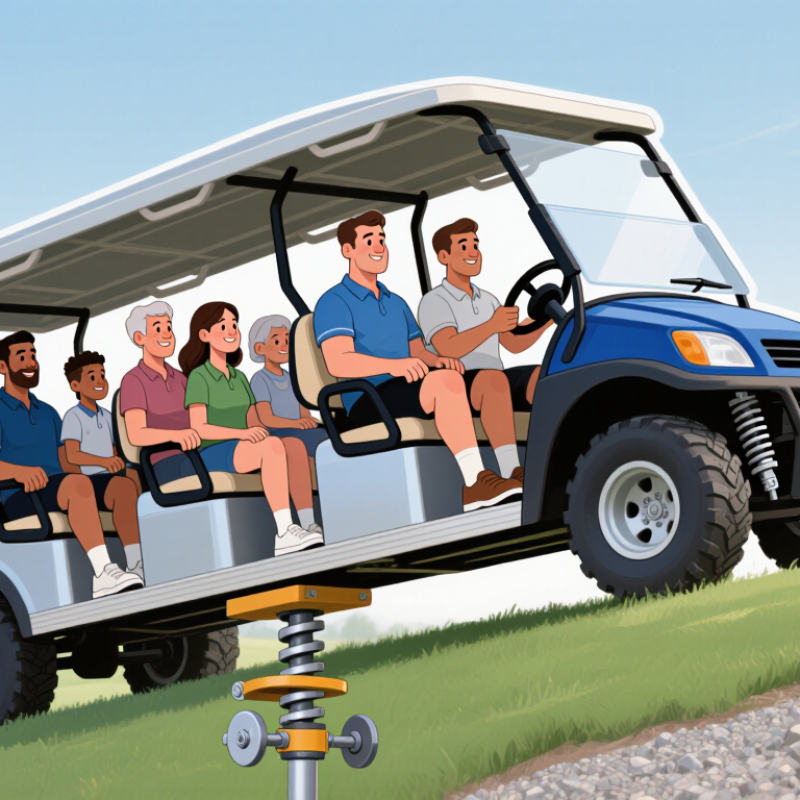
Choosing a six-passenger lifted golf cart starts with real use cases, not appearance. Will it carry workers, children, guests, or equipment? A rear-facing seat layout can improve capacity, but it may reduce storage space. Measure your usual routes, parking areas, and turning points before selecting a larger body.
Terrain changes the decision. Lifted clearance helps on gravel, grass, and uneven paths, but it can raise the center of gravity. That may affect cornering and braking, especially with six occupants. Check the suspension, tire condition, brake response, and recommended load limit. A useful field test is simple: drive slowly over your steepest route with the intended passenger weight. Do not rely only on a showroom inspection. I once underestimated how sharply loose gravel changed stopping distance.
Tips: Check local 15-mph golf-cart rules before purchase. Speed limits may vary by city, county, road type, or community. Confirm whether your route permits golf carts, and ask about required lights, mirrors, seat belts, slow-moving-vehicle markings, registration, or insurance. Requirements can change. Written confirmation from the local transport office is safer than casual advice. Also, test the cart below the legal limit, not at its maximum setting. A six-passenger cart should feel controlled, quiet, and stable when fully occupied. If the steering feels vague or the rear seats bounce excessively, reconsider the setup. More lift is not always better.
A 15-mph local golf-cart rule should be treated as the operating limit when it applies. For comparison, Florida defines a golf cart as a vehicle designed for speeds below 20 mph, while U.S. federal low-speed-vehicle requirements cover vehicles capable of 20–25 mph. A six-passenger lifted cart may be practical for campuses, resorts, neighborhoods, and large properties, but passenger capacity does not determine road legality. Always verify local registration, equipment, route, and speed requirements before use.
References: Florida Statutes §320.01 and 49 CFR §571.500.
For a six-passenger lifted golf cart, voltage affects usable power, not just top speed. A 48-V powertrain often suits level roads, paved communities, and moderate passenger loads. It can deliver practical range with lower charging and service costs. However, range depends on battery capacity, tire size, terrain, payload, and driving habits. Six adults, coolers, and bags can quickly change the result.
A 72-V system usually provides stronger hill performance and smoother acceleration under heavy loads. It may maintain speed better on long grades or rough paths. The extra voltage can also support larger motors and demanding accessories. Still, 72 V does not automatically mean double the range. Battery chemistry, amp-hour capacity, controller settings, and motor efficiency matter more than voltage alone. I would not choose by voltage alone. That shortcut is tempting, and sometimes wrong.
Tips: Test the cart with realistic weight. Drive the steepest route you expect to use. Watch battery voltage under load, not only at rest. Check braking, suspension, and tire clearance after lifting. A lifted cart with oversized tires may lose range and climbing strength. Also, confirm that the charger and electrical components match the battery system. For mostly flat use, 48 V may be the sensible choice. For frequent hills and full passenger loads, 72 V offers more reserve. Yet it usually costs more and requires better technical maintenance. Clearance looks impressive. Usability matters more.
A six-seat layout does not prove safe six-person capacity. Verify the rated payload in the technical data sheet. Calculate passengers, batteries, accessories, and luggage together.
For example, six adults at 80 kilograms already create 480 kilograms before cargo.
The chassis, tires, suspension, and axle ratings must support that load. Do not rely on “heavy-duty” wording. It sounds useful, but it proves little.
ANSI/ITSDF B56.8 provides a recognized framework for golf-car design and safety evaluation. Request test records covering service braking, parking-brake holding, steering control, and stability.
A practical report should identify vehicle weight, test load, surface condition, speed, and stopping distance.
Check results with six occupied seats, not an empty cart. Lifted suspension also raises the center of gravity, which can reduce side-slope stability.
Ask for measured tilt or stability-test results under the intended payload. Numbers matter.
The U.S. Consumer Product Safety Commission’s historical NEISS analysis estimated about 15,000 golf-car injuries requiring emergency treatment annually in 2007. That figure is old, so it should not become a current market estimate. It does show why braking and stability deserve direct verification.
I would inspect tire pressure, steering play, brake adjustment, and frame welds during a loaded test drive. A checklist can still miss uneven pavement, sudden passenger movement, or downhill braking behavior. Test those conditions carefully.
Choosing a six-passenger lifted golf cart starts with geometry, not appearance.
In field inspections, I measure clearance at the differential housing, not the floorboard. A lift kit raises the chassis, but it can change steering angles, brake-line slack, and driveshaft alignment. ANSI/ITSDF B56.8 guidance stresses stability, braking, and steering performance for personnel carriers. It does not approve every aftermarket combination. That distinction matters.
Tire diameter changes more than style.
A four-inch diameter increase adds roughly two inches beneath the axle, before suspension compression. Larger tires may improve clearance, but they can increase steering effort and drivetrain load. Check the Tire and Rim Association Year Book for tire load and inflation data. Six passengers, batteries, and luggage require the correct combined load rating. Never rely on sidewall appearance alone. Measure static clearance with the cart fully loaded.
Turning radius is where many lifted six-seat builds disappoint.
SAE J695 provides a repeatable method for evaluating vehicle turning ability. Copy that discipline during a practical test. Mark the outside-front tire path at full steering lock, then repeat with six adults aboard. Do not test it empty. An extended wheelbase can make narrow paths and garage entrances awkward. I once judged a build by its impressive clearance and overlooked its wide turning circle. That shortcut was costly. Professional test reports often publish unloaded figures, which buyers should question. Record both inside and outside turning circles before approving the lift, tire diameter, and wheel offset together.
A lifted six-passenger golf cart needs careful battery and cost calculations. Extra seats, larger tires, and raised suspension increase energy use. Do not trust range estimates from flat, empty test tracks. A full passenger load changes everything.
For example, a 48-volt, 200-amp-hour battery stores 9.6 kilowatt-hours nominally. About 7.7 kilowatt-hours may be usable after reserving capacity. Charging cost depends on local electricity rates and charger efficiency.
If one charge uses 9 kilowatt-hours, a rate of $0.18 costs about $1.62 per charge.
Record real usage for two weeks. Your first estimate may be wrong.
Check battery replacement terms, charger coverage, frame protection, and exclusions for commercial or heavy use. A longer warranty is not always better if labor and transport are excluded.
Calculate total ownership cost by adding purchase price, electricity, tires, service, battery replacement, insurance, and storage. Divide that amount by expected years or operating hours.
This reveals the cheaper cart, not merely the lower-priced one.
Tips:
Test the cart uphill with six adults. Measure charging time. Ask for written warranty terms. Keep service records. Consider winter range loss, too. It is easy to overlook.
Define the usual passengers, equipment, routes, parking areas, and turning points. Appearance can mislead. Measure real spaces before buying.
It increases passenger capacity, but may reduce storage space. Coolers, bags, and tools can quickly fill the remaining area.
Extra clearance helps on gravel, grass, and rough paths. However, lifting raises the center of gravity and may affect cornering.
Drive slowly over your steepest route with realistic passenger weight. Check steering, braking, suspension movement, and tire clearance.Test it loaded.
Confirm the local speed limit and permitted routes. Ask about lights, mirrors, seat belts, markings, registration, and insurance.
It may suit flat roads, paved communities, and moderate loads. Usable range still depends on batteries, tires, terrain, and driving habits.
It usually offers stronger hill performance and smoother acceleration under heavy loads. It can help on long grades and rough paths.
No. Battery capacity, motor efficiency, controller settings, tire size, and payload matter more. Voltage alone is an easy shortcut, and sometimes wrong.
Check braking, suspension, steering response, tire clearance, and stability. Oversized tires may reduce range and climbing strength.
Test it below the legal limit with six occupants, bags, and realistic terrain. A quiet, controlled ride matters more than maximum speed.
Choosing 6-Passenger Lifted Golf Carts requires more than selecting extra seating and larger tires. Start by defining how the vehicle will be used, including passenger frequency, cargo needs, terrain, and local 15-mph golf-cart operating rules. Compare 48-volt and 72-volt powertrains according to expected range, load capacity, charging requirements, and hill-climbing performance. Confirm that the cart’s six-seat payload, braking system, and stability are suitable for real-world use and aligned with applicable ANSI/ITSDF B56.8 safety considerations.
Next, evaluate the lift kit, tire diameter, ground clearance, suspension, and turning radius, since these features directly affect comfort, handling, and maneuverability. Estimate battery lifespan, charging costs, routine maintenance, warranty coverage, and total ownership cost before making a decision. The best 6-Passenger Lifted Golf Carts balance passenger capacity, terrain capability, safe control, operating efficiency, and long-term value rather than focusing only on appearance or initial price.