Choosing the right 6-Passenger Electric Golf Carts requires more than counting seats. Real-world comfort, battery range, braking, and storage capacity matter just as much. A cart may look spacious online, yet feel cramped when six adults climb aboard with bags, groceries, or sports equipment.
Sarah Mitchell, an electric mobility consultant and former fleet manager, says, “The best cart is not the fastest one; it is the one that fits your daily route and charging habits.” That practical view guides this buying guide. We will examine seating layouts, motor performance, battery chemistry, suspension, turning space, and safety equipment. We will also consider driveway width and garage storage. Small details become frustrating quickly.
Experience helps here.
Lithium batteries often provide lighter weight and faster charging, but they can increase the purchase price. Lead-acid batteries may suit buyers with simpler budgets, although maintenance can be less convenient. Motor power also deserves careful thought. A six-person cart carrying passengers uphill needs more confidence than a lightly loaded neighborhood cruiser.
Not every attractive specification tells the full story. Some choices still involve compromise. A longer frame may improve stability but reduce maneuverability in tight spaces. Extra accessories can add comfort, yet they may reduce available payload. This guide will help readers compare those trade-offs honestly and select 6-Passenger Electric Golf Carts for their property, community, resort, or family routine. Expect useful answers, but verify local dealer support before purchasing.
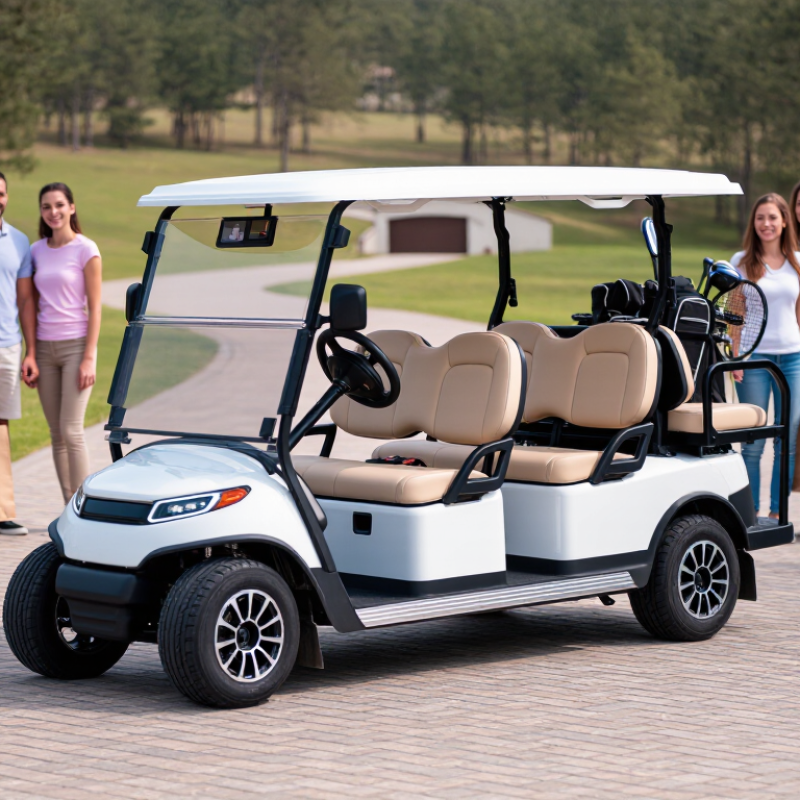
Understanding the Key Features of Six-Passenger Electric Golf Carts
How to Choose the Best 6 Passenger Electric Golf Carts
A six-passenger electric golf cart needs more than two extra seats. Its frame, motor, brakes, and suspension must handle a heavier load safely. The International Organization for Standardization highlights load stability and braking performance as essential mobility-vehicle concerns. Check the stated payload, not only the seating capacity. Six adults and small bags can exceed 1,000 pounds quickly. That changes stopping distance.
Battery type also matters. Lithium-ion packs usually offer lower weight and faster charging than lead-acid batteries. The U.S. Department of Energy reports that lithium-ion batteries provide high energy density, but temperature management affects their performance and lifespan. Ask about usable range, charging time, battery warranty, and replacement cost. A larger battery is not automatically better. It may add weight and reduce efficiency. The estimate can also shrink on hills or rough paths.
Tips: Test the cart with six adults if possible. Drive over a slope, turn tightly, and brake gently. Listen for suspension noise. Inspect seat belts, lights, mirrors, and a secure battery compartment. The National Highway Traffic Safety Administration stresses that occupant protection features reduce injury risk in low-speed vehicles. However, golf-cart safety data often excludes private-course use, so comparisons remain imperfect. That limitation deserves attention. Choose transparent specifications over impressive claims.
Assessing Seating, Size, and Passenger Comfort
Choosing the Best 6 Passenger Electric Golf Carts
A six-passenger cart should feel usable, not merely full. Measure the seat width, legroom, and footwell before comparing appearance. Each passenger needs enough knee space to sit without turning sideways. Rear-facing seats often reduce comfort for taller adults. Test them carefully.
Cart length and width affect daily handling. A longer frame may provide better legroom, but it needs more space for turning and parking. Check the turning radius in your driveway, pathway, or storage area. A few extra inches can matter. Suspension also deserves attention, especially on uneven paths. Firm seats may look durable, yet they can become uncomfortable during extended rides.
I once focused too heavily on passenger capacity. The rear bench looked practical, but the entry step was high and awkward. That changed my assessment. Look for stable handholds, non-slip flooring, and seat cushions that support the lower back. A properly placed grab rail can help older passengers enter with confidence. Confirm the vehicle’s stated load capacity, because six adults and their belongings add weight quickly. Comfort depends on balance, not just padding. Wide seats can still feel cramped when armrests or side panels reduce usable space. A short test drive with several passengers reveals more than a brochure. Even then, comfort is subjective, and my preferred seat firmness may not suit everyone.
Comparing Battery Types, Range, and Charging Requirements
Choosing the best 6 passenger electric golf cart starts with its battery chemistry. Lead-acid batteries usually cost less and are widely understood by service technicians. They are heavier, need regular water checks, and may lose range as they age. Lithium-ion batteries weigh less, recharge faster, and often provide steadier performance. Their higher purchase price can be difficult for some buyers.
Range depends on passenger weight, hills, tire pressure, temperature, and driving speed. A cart rated for 40 miles may travel much less on steep paths with six adults onboard. Ask for testing conditions before trusting a range figure. For frequent short trips, a 25-mile practical range may be enough. For large properties, choose extra capacity rather than relying on optimistic estimates.
Charging habits also affect battery life. Lead-acid models commonly need several hours after use, and the charger should match the battery voltage. Lithium-ion systems can often accept opportunity charging, but the supplied charger remains essential. Keep the charging area dry, ventilated, and free from clutter. I once underestimated hill climbing and returned with almost no reserve. That mistake changed my rule: keep at least 20 percent capacity unused. Check the battery meter, but do not treat it as perfectly precise. Temperature can distort its reading. Ask a qualified technician to inspect wiring, connectors, and charger compatibility before purchase.
Evaluating Safety Systems, Performance, and Terrain Capability
Choosing the best six-passenger electric golf cart starts with safety, not styling. The U.S. Consumer Product Safety Commission has reported thousands of golf-cart injuries requiring emergency treatment each year. That evidence makes seat belts, handholds, mirrors, headlights, and reliable brakes essential. Look for a rollover-protection structure and an interlock that prevents movement while passengers enter. A speed limiter also matters near pedestrians, especially on uneven paths.
Performance must be tested with six adults, not an empty vehicle. Measure acceleration, braking distance, turning stability, and battery range on the same route. The U.S. Department of Energy reports that electric vehicles typically convert 77–82% of stored electrical energy into motion. However, steep grades, cold weather, heavy loads, and low tire pressure reduce practical range. Regenerative braking can help downhill control, but it is not a substitute for mechanical brakes. I would not trust a brochure’s range figure alone. Real testing is less convenient, but more honest.
Tips: Test wet grass, gravel, and a moderate slope with a full load. Check ground clearance, tire ratings, suspension travel, and hill-start behavior. Listen for brake noise. Also inspect charging protection and battery ventilation. A perfect cart does not exist; terrain near your home may expose weaknesses that a showroom floor hides.
How to Choose the Best 6-Passenger Electric Golf Cart
Safety Systems, Performance, and Terrain Capability
This screening index uses commonly cited engineering benchmarks for six-passenger electric carts, including four-wheel braking, seat belts, lighting, a typical road-use speed near 15 mph, approximately 25–40 miles of range, 15–20% grade capability, and 6–8 inches of ground clearance. Higher scores indicate a stronger overall fit for the listed requirement; actual performance varies with passenger load, battery condition, tire selection, surface quality, and weather.
Balancing Price, Maintenance, Warranty, and Long-Term Value
Choosing the best six-passenger electric golf cart involves more than comparing sticker prices. A lower-cost model may need frequent battery checks, brake adjustments, or replacement tires sooner than expected. During inspections, examine the battery compartment for corrosion, loose cables, and damaged connectors. Test the cart on a slope, with six adults if possible. Watch for slow acceleration, unusual noise, or weak braking. These details reveal ownership costs better than showroom polish.
Maintenance should fit your routine and budget. Ask how often batteries need watering, when the drive belt requires inspection, and whether replacement parts are easy to source. Battery chemistry also affects long-term value, charging time, and replacement expense. I have learned that vague maintenance schedules create unpleasant surprises. Still, buyers sometimes focus too heavily on battery price and ignore suspension wear. That can be a mistake. Request written service intervals and realistic annual maintenance estimates.
Tips: Compare the complete ownership cost, not only the purchase price. Read every warranty condition, especially coverage for batteries, chargers, and electrical components. Confirm who performs warranty repairs and how long parts usually take to arrive. A longer warranty is not automatically better if exclusions are broad. Keep invoices and service records from day one. They support future claims and may protect resale value. Choose practical seating, weather protection, ground clearance, and storage space before attractive extras. Six passengers need stable handling. Test comfort carefully. Your first choice may still need reconsideration after a real-world test drive.
How to Choose the Best 6 Passenger Electric Golf Carts - Balancing Price, Maintenance, Warranty, and Long-Term Value
| Cart Configuration |
Typical New Price
(US$) |
Battery System |
Typical Range
per Charge |
Charging Time |
Typical Payload |
Estimated Annual Maintenance |
Common Warranty Coverage |
Estimated 5-Year Ownership Cost* |
Best Fit |
| Entry-Level 6-Passenger Rear-Facing Seat |
$9,000–$13,000 |
48V lead-acid
4–8 batteries |
25–40 miles |
8–10 hours |
900–1,100 lb |
$450–$800 |
Vehicle: 1 year
Battery: 1–2 years |
$13,000–$19,000 |
Lowest purchase price |
| Mid-Range 6-Passenger Rear-Facing Seat |
$13,000–$18,000 |
48V lead-acid
or entry lithium |
35–55 miles |
5–10 hours |
1,000–1,300 lb |
$350–$700 |
Vehicle: 1–2 years
Battery: 2–5 years |
$17,000–$25,000 |
Balanced value |
| Lithium-Ion 6-Passenger Forward-Facing Seat |
$18,000–$27,000 |
48V lithium-ion |
45–70 miles |
4–7 hours |
1,000–1,400 lb |
$200–$450 |
Vehicle: 2–4 years
Battery: 5–8 years |
$20,000–$29,000 |
Lowest routine maintenance |
| Long-Range Lithium Utility Configuration |
$22,000–$32,000 |
51V–72V lithium-ion |
60–90 miles |
4–8 hours |
1,200–1,600 lb |
$250–$550 |
Vehicle: 2–4 years
Battery: 5–8 years |
$24,000–$35,000 |
Frequent or commercial use |
| Refurbished 6-Passenger Electric Cart |
$6,000–$11,000 |
Lead-acid or replacement lithium |
25–60 miles |
4–10 hours |
800–1,300 lb |
$600–$1,200 |
Seller-dependent
Typically 30 days–1 year |
$11,000–$20,000 |
Budget-conscious buyers |
Buying guidance: Lead-acid batteries generally cost less initially but require watering, cleaning, and periodic replacement. Lithium-ion batteries usually cost more upfront, weigh less, charge faster, and typically require less routine maintenance. Before purchasing, verify the charger, battery replacement price, parts availability, local service support, seating layout, braking performance, hill capability, and whether the warranty covers commercial or rental use.
*Ownership-cost assumptions: Estimates include the purchase price, routine service, energy, and one expected battery-related allowance where applicable over five years. They exclude financing, registration, insurance, taxes, accessories, major accident repairs, and resale value. Actual costs vary by location, electricity rates, annual mileage, terrain, climate, and passenger load. Price and specification ranges represent typical U.S. market levels for new and refurbished 6-passenger electric carts and are intended for comparison rather than as manufacturer quotations.
|
FAQS
Measure seat width, legroom, footwell space, and overall vehicle length. Each passenger should sit without turning sideways. Space matters.
Not always. Rear-facing seats may limit knee room and feel awkward for taller adults. Test them with several passengers before buying.
A longer cart can improve legroom, but it needs more turning and parking space. Check your driveway, pathway, and storage area.
Look for stable handholds, non-slip flooring, supportive cushions, and a practical entry step. A well-placed grab rail can help older passengers.
Take a short drive with several passengers and realistic belongings. Test slopes, braking, acceleration, and unusual noises. Watch carefully.
Check for corrosion, loose cables, and damaged connectors. These small details can reveal future maintenance costs better than showroom appearance.
Include battery care, brake adjustments, tire replacements, charging expenses, and suspension wear. The purchase price alone can mislead you.
Read coverage for batteries, chargers, and electrical components. Ask who handles repairs and how quickly replacement parts usually arrive.
Keep invoices, inspection notes, and service records from day one. They may support warranty claims and preserve resale value.
Yes. Comfort is subjective, and my preferred seat firmness may not suit everyone. A real-world test can change your assessment.
Conclusion
Choosing the right 6-Passenger Electric Golf Carts requires more than simply counting seats. Buyers should consider the cart’s overall dimensions, seating layout, legroom, entry points, and weather protection to ensure a comfortable experience for every passenger. Battery type, driving range, charging time, and access to suitable charging equipment are also essential factors, especially for frequent or extended use.
Safety and performance should be evaluated according to the intended terrain and passenger load. Look for dependable braking, steering, lighting, seat belts, stability features, and a motor system capable of handling slopes or uneven surfaces. Finally, compare the purchase price with expected maintenance, battery replacement, warranty coverage, and long-term durability. A slightly higher initial investment may provide better reliability, lower operating costs, and greater value over time.