China has become a major manufacturing base for Low Speed Vehicles (LSVs), serving resorts, campuses, industrial parks, airports, and urban communities. Buyers can find electric golf carts, neighborhood shuttles, utility vehicles, and customized transport platforms from many experienced suppliers. However, a polished website does not prove manufacturing capability. Product photos may look similar, while battery quality, frame durability, controller performance, and after-sales support vary considerably.
This guide introduces China’s top 10 LSV suppliers for global buyers. The selection focuses on practical indicators, including production experience, model diversity, export history, customization capacity, quality control, and communication reliability. Factory visits, sample testing, and document verification remain valuable. Ask for battery specifications, test reports, warranty terms, spare-parts policies, and realistic delivery schedules. Small details matter. A loose connector can delay an entire fleet.
The ranking should not be treated as an absolute verdict. Supplier performance may change with management, materials, and market conditions. Some manufacturers excel at golf carts but struggle with heavy-duty utility models. Others offer attractive prices but limited overseas service. Buyers should compare total ownership costs, not only the initial quotation. This overview provides a practical starting point, while independent due diligence remains essential before placing an order. There is no perfect supplier. Careful questions often reveal more than impressive brochures.
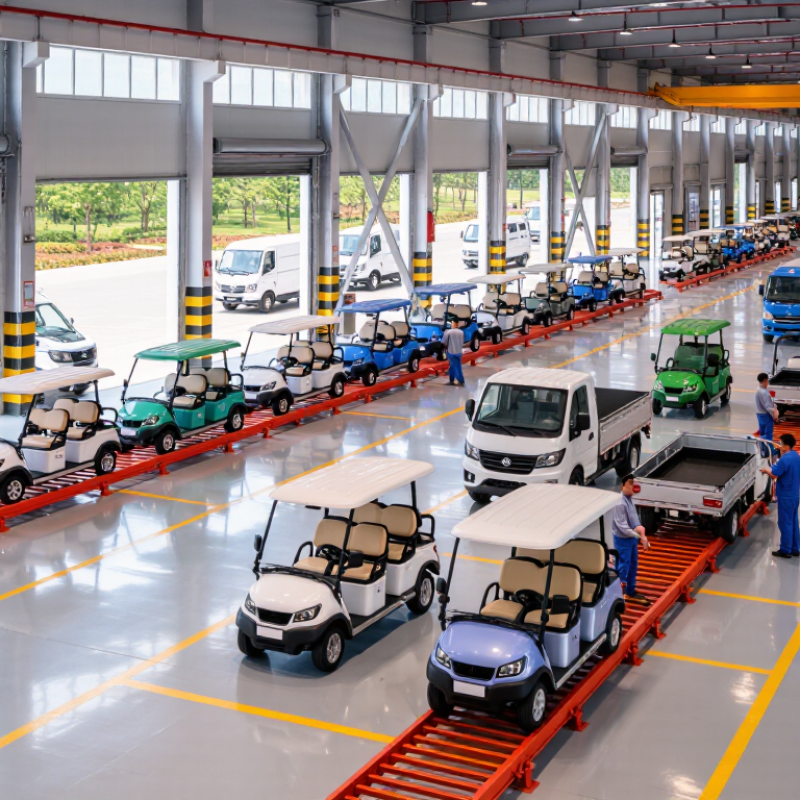
What Are Low-Speed Vehicles and Why Do Global Buyers Choose China?
China Top 10 LSV Suppliers for Global Buyers
Low-speed vehicles, or LSVs, are compact four-wheel vehicles designed for controlled, short-distance travel. In the United States, federal rules generally define them as vehicles reaching 20 to 25 mph under FMVSS 500. Definitions differ across markets, so buyers must check local requirements carefully. Typical uses include resorts, industrial parks, campuses, warehouses, and neighborhood transport.
Why do global buyers source from China? The country offers mature electric-vehicle supply chains, broad battery choices, and flexible production capacity. The International Energy Agency reported that China produced more than half of the world’s electric cars in 2023, showing strong manufacturing depth. Grand View Research also valued the global golf cart market at over USD 1.7 billion in 2023, with continued growth expected. LSVs are not only golf carts, however. They may include utility carriers, passenger shuttles, and enclosed delivery vehicles. A lower purchase price can hide battery, charger, or after-sales risks. That assumption needs testing.
Tips: Ask suppliers for battery test records, charging specifications, warranty terms, and production photos. Confirm speed limits, lighting, braking, seat-belt, and registration requirements before ordering. Request an independent inspection. Check spare-part availability in your destination market. A sample unit is useful, but one vehicle cannot reveal every long-term problem.
China Top 10 LSV Suppliers for Global Buyers - What Are Low-Speed Vehicles and Why Do Global Buyers Choose China?
Low-speed vehicles (LSVs) are compact electric vehicles designed for controlled, short-distance transportation. Their permitted speed, road access, safety equipment, and registration requirements vary by country or region. The table below presents ten anonymized supplier capability profiles based on common Chinese manufacturing configurations, without displaying company or brand names.
| Profile | Vehicle Configuration | Typical Seating | Typical Maximum Speed | Typical Driving Range | Common Battery Options | Primary Applications | Customization Capability | Why Global Buyers Consider China | Important Buyer Verification |
|---|---|---|---|---|---|---|---|---|---|
| Profile 01 | 2-seat golf cart | 2 passengers | 20–30 km/h | 60–100 km per charge | Lead-acid or lithium-ion; commonly 48 V | Golf courses, resorts, gated communities | Roof, windshield, color, seats, storage, and charger options | Broad component availability, flexible specifications, and competitive manufacturing costs | Battery chemistry, charger compatibility, braking performance, and local road-use rules |
| Profile 02 | 4-seat leisure cart | 4 passengers | 20–30 km/h | 60–110 km per charge | 48 V or 60 V lithium-ion and lead-acid systems | Resorts, hotels, residential developments, campuses | Rear-facing seats, doors, luggage racks, lighting, and weather protection | High-volume production experience and access to export-oriented assembly resources | Payload rating, hill-climbing ability, suspension durability, and spare-parts support |
| Profile 03 | 6-seat passenger cart | 6 passengers | 20–35 km/h | 70–120 km per charge | 60 V or 72 V lithium-ion systems are common | Tourism facilities, airports, large campuses, and parks | Passenger layout, removable curtains, doors, safety belts, and luggage space | Manufacturers can often adapt seating layouts and electrical systems for different markets | Overall dimensions, turning radius, axle load, seat-belt provisions, and certification needs |
| Profile 04 | 8–14 seat shuttle | 8–14 passengers | 25–40 km/h | 80–140 km per charge | 72 V lithium-ion or lead-acid battery packs | Industrial parks, hotels, campuses, terminals, and event venues | Open or enclosed body, wheelchair access, handrails, doors, and route signage | Integrated production of body, chassis, powertrain, and interior components can simplify sourcing | Passenger safety systems, emergency exits, accessibility requirements, and local vehicle approval |
| Profile 05 | utility cargo vehicle | 1–2 passengers | 25–45 km/h | 70–130 km per charge | 48 V, 60 V, or 72 V battery systems | Warehouses, factories, farms, maintenance operations, and logistics sites | Flatbed, box body, tipping bed, side panels, and tow equipment | Multiple body styles and relatively flexible low-volume customization are widely available | Rated payload, towing capacity, frame strength, waterproofing, and commercial-use warranty |
| Profile 06 | refrigerated transport cart | 1–2 passengers | 20–35 km/h | 50–100 km per charge | 72 V lithium-ion or lead-acid systems | Food distribution, resort service, campus catering, and cold-chain support | Insulated cargo compartment, cooling unit, shelving, and temperature monitoring | Special-purpose body fabrication and electrical integration can support application-specific orders | Insulation performance, refrigeration power consumption, temperature range, and hygiene requirements |
| Profile 07 | street-legal compact EV | 2–4 passengers | 40–70 km/h, subject to local classification | 100–200 km per charge | 72 V to 144 V lithium-ion systems | Private communities, urban service routes, commercial facilities, and local commuting | Lighting, mirrors, windshield, doors, instrument panel, and safety equipment | China has a mature electric-vehicle supply chain covering motors, controllers, batteries, and vehicle electronics | Homologation, crash requirements, VIN or identification rules, emissions classification, and road registration |
| Profile 08 | airport and terminal shuttle | 8–14 passengers | 25–40 km/h | 80–150 km per charge | 72 V or 96 V lithium-ion battery packs | Airports, railway stations, exhibition centers, and large public facilities | High-capacity charging, destination displays, accessibility equipment, and fleet telematics | Fleet-oriented manufacturing and supplier networks can support standardized multi-unit orders | Charging infrastructure, duty cycle, passenger-flow design, accessibility, and operator training |
| Profile 09 | resort and sightseeing vehicle | 6–23 passengers | 20–35 km/h | 70–130 km per charge | 48 V, 72 V, or 96 V systems | Scenic areas, resorts, zoos, parks, and tourism destinations | Open-air seating, canopy, curtains, audio system, route display, and themed bodywork | Flexible exterior design and interior layouts can help buyers match different tourism environments | Passenger capacity, incline performance, weather protection, noise level, and evacuation access |
| Profile 10 | municipal and maintenance EV | 1–5 passengers | 25–45 km/h | 70–140 km per charge | 60 V, 72 V, or 96 V lithium-ion systems | Street cleaning, parks, utilities, property management, and public-service operations | Water tanks, tool compartments, refuse bodies, warning lights, and work platforms | Application-specific fabrication and a wide range of electric components can support tailored fleet solutions | Payload distribution, electrical protection, operator visibility, service intervals, and municipal procurement standards |
Data note: Specifications are typical market ranges rather than guaranteed product specifications. Actual speed, range, payload, battery capacity, charging time, and legal status depend on vehicle configuration, terrain, weather, load, battery technology, and destination-market regulations. Buyers should request technical drawings, test reports, battery documentation, warranty terms, and applicable conformity certificates before placing an order.
FAQS
A low-speed vehicle is a compact four-wheel vehicle for controlled, short-distance travel. Typical uses include resorts, campuses, warehouses, and industrial parks. It is not simply a golf cart.
In some markets, low-speed vehicles generally reach 20 to 25 mph. Definitions differ by location. Check local rules before ordering.
China offers mature electric-vehicle supply chains and flexible production capacity. Buyers can choose different batteries, body styles, and seating layouts. Lower prices may hide later costs.
Common types include utility carriers, passenger shuttles, and enclosed delivery vehicles. Some models carry people. Others handle tools, packages, or equipment.
Request production photos, component records, and load-testing documents. Check welds, cables, seats, lighting, and braking response. A quiet factory proves little.
Ask for battery test records, charging specifications, cycle-life details, and warranty coverage. Confirm replacement procedures and compatible chargers. Battery details matter.
Compare the vehicle price with batteries, packaging, shipping, spare parts, and possible import charges. A cheaper quotation may not be cheaper overall. That assumption needs testing.
The supplier should provide wiring diagrams, maintenance instructions, and replacement-part numbers. Ask about damaged controllers, delayed components, response times, and warranty evidence. Get everything in writing.
No. A sample can mislead. Inspect pilot units and test realistic loads, braking distance, battery temperature, and controller response. Batch consistency may still remain uncertain.
Conclusion
Low Speed Vehicles (LSVs) are compact, energy-efficient vehicles designed for short-distance transportation in communities, resorts, campuses, industrial parks, and commercial sites. Global buyers often choose Chinese suppliers because China offers a broad manufacturing base, flexible customization, competitive pricing, and access to electric powertrain and battery technologies. The industry includes specialized manufacturers, component producers, assembly facilities, and export-oriented trading companies, creating a diverse supply network for different applications and budgets.
This guide introduces ten leading categories of Chinese LSV suppliers for international buyers and explains how to compare them by product quality, pricing, production capacity, customization options, warranty terms, and after-sales support. Before importing, buyers should carefully verify supplier qualifications, technical specifications, battery and charger compatibility, testing documentation, packaging, delivery arrangements, spare-parts availability, and the requirements of the destination market. A structured evaluation process helps reduce purchasing risks and supports reliable long-term cooperation.